

Wine Chronicles: When Wine Gets Too Perfect
By Dan Berger

Summary: Dan Berger explores how the pursuit of clarity, polish and consistency can strip wine of the regional character and personality that make it distinctive. He examines common cellar practices, from fining and filtration to additives such as gum arabic and Mega Purple, and questions when intervention begins to undermine authenticity. Berger also traces his changing view of natural wine, finding that producers have grown more attentive to flaws while preserving individuality. The broader tension, he writes, is between technical perfection and wines that still reflect place, vintage and the choices not made in the cellar.
“The objection is not about quality; it is about the variety of the world. That model spread a uniform idea of excellence and made wines born in very distant places resemble one another.” — Roberto Frega, senior researcher in philosophy at the Centre National de la Recherche Scientifique in Paris
NAPA VALLEY, Calif. — In the world of wine evaluation, far too much emphasis is placed on alleged greatness and far too little importance is assigned to the traits of personality, authenticity, regional character and balance. Illustrating this is that too many wineries place far too much emphasis on what wine looks like, even to the extent that they will do things to a wine to make it sell, even if it eliminates some of the wine’s character. What many wineries do isn’t dishonest. They do things mainly because most commercial wine is produced for the masses — people who, by and large, know extremely little or nothing about wine.
A truism in selling wine is that it must look good, even if the quality must be degraded to get to a faultless appearance.
This thesis is easily challenged by people who might have other opinions. But after writing about wine for more than 50 years, I have observed what’s really happening and why. And some of the tactics have nothing to do with aroma or taste.
This is not a universal condemnation. Many wineries understand the legacy that this industry carries with it and have chosen to do the right things. Unfortunately, they are in the minority. They occasionally have to engage in a difficult educational explanations to alert potential buyers why a wine is the way it is.
Making wine is a murky enterprise. Most people believe that all fine wines come from grapes grown overwhelmingly naturally, harvested with surgical skill, fermented with no additions and bottled to be as unblemished as an operating room. So most large and medium-size wineries try to foster this image.
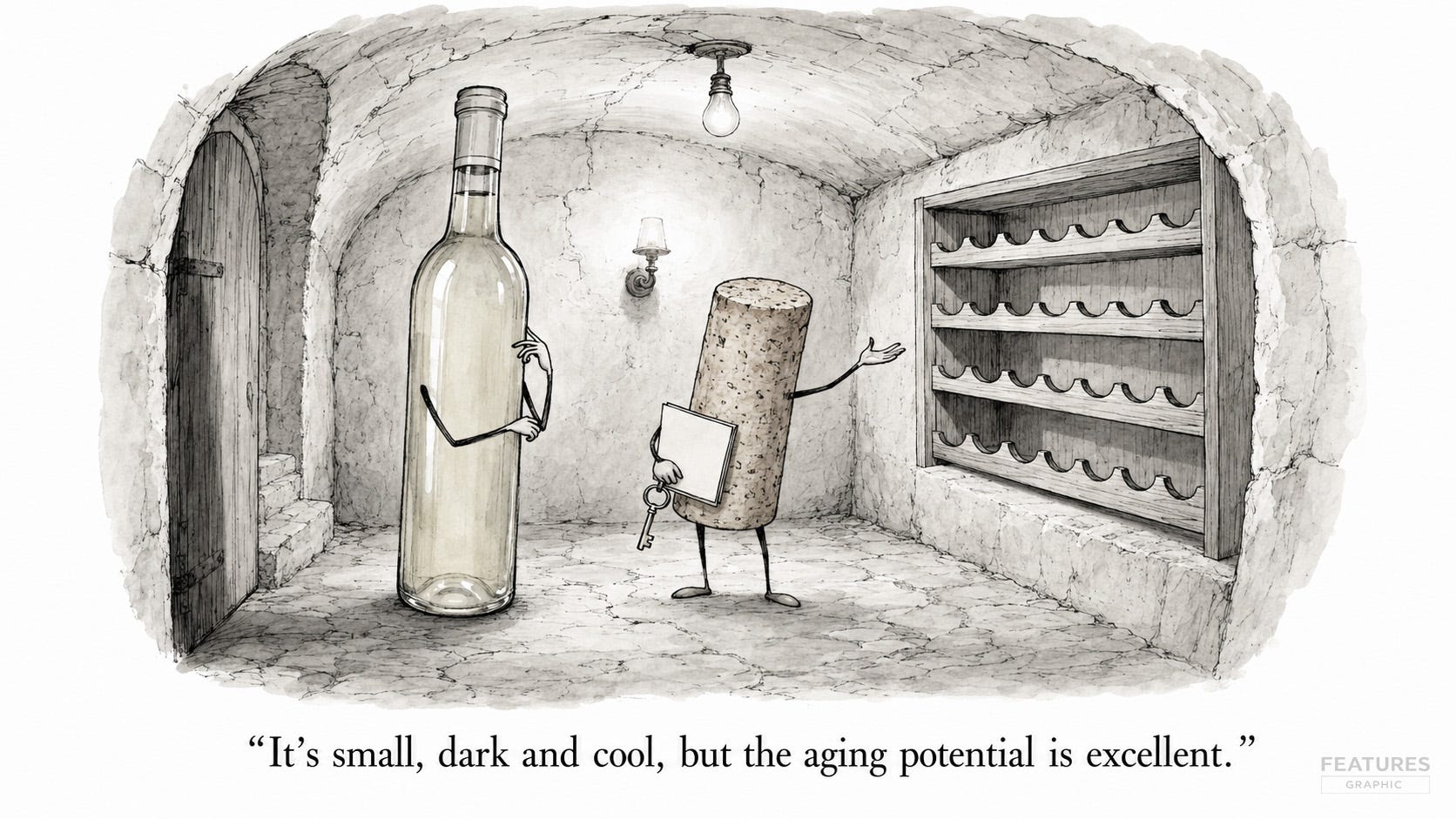
Early in the winemaking process, the liquid does not look particularly appetizing. To make it look better before it lands on a retail shelf or wine list, most commercial wineries employ procedures to make it look, smell and taste better, even if the wine loses something essential.
And consumers frequently prove their misunderstanding of theoretical excellence. Numerous times I have seen a novice wine-lover hold a glass to the light and proclaim the wine to be gorgeous because it was clear, then take a sniff and proclaim it to be absolutely pure and then take a sip and announce it to be complex.
On a few of those occasions, when I knew the wine well, I also knew that its clarity was (for me) a flaw, its aroma was (for me) blander than it needed to be and its taste was (for me) relatively insipid. But the reaction of the unskilled taster is all that matters. He or she bought the wine, so the winery that made it obviously made the right decision — at least for that buyer and all of his or her cohorts.
I believe the best wines are all about personality and balance. This entails many assumptions, one of which is the benefits of terroir; other pluses are regional identity, structure, house style and vintage. And to achieve some of these elements, great winemakers know they have to work in harmony with growers and respect the fruit Mother Nature provided.
And then to do as little as possible to the fruit so that the end result will display more of the authenticity that real wine-lovers not only adore but are willing to pay to get. Needless to say, people who buy solely by score (the higher the better) often end up getting a mirage.
Some winemakers have no qualms about imposing themselves on their grapes. Others approach this as a two-way compact, a cooperative effort between themselves and the raw material.
The following quote is fictional, but it is based on a true story told to me by an extremely reputable source about 25 years ago. UC Davis professor Maynard Amerine was asked by a student how many decisions a winemaker had to make before bottling a great wine. After due consideration, the professor said, “About 200, but half of them are to do nothing.”
In fact, Amerine was alluding to the belief that sometimes Mother Nature knows more than we do, and that human intervention can be like putting too much salt in the soup. Often it’s best to leave well enough alone. The result will more accurately deliver character.
A Look at Some of the Issues
Too little or too much fruit: Some people believe that the smaller the tonnage off a vineyard, the more intense the wine. Most quality growers say that tonnage is immaterial as long as the vines are balanced. Sometimes too little fruit makes a terrible wine. Sometimes more is better, to a point. The goal is not always intensity. The goal should be flavor maturity and harmony.
Sulfur dioxide. Almost every winery in California and most commercial wineries around the world have used this additive, which protects a wine from spoilage for thousands of years. But is it always needed? Some natural wine producers suggest otherwise.
Fining: Particulate matter often exists, mainly in red wines. Fining has been routinely used to smooth out the rough spots in numerous wines. But fining can also strip a wine of some of its flavor. Many fining agents used today are derivatives of animal products. Recently many wineries are considering reducing or eliminating fining, but it is still widely practiced.
Gum arabic. The addition of this substance, which is legal, can produce a silky, soft texture in red wines, making them more approachable when they are young. Some winemakers hate the use of this product, but some extremely expensive red wines still use it. It can make a wine’s structure softer, which is the last thing some of these wines need if they are to work with food.
Mega Purple: Many consumers still believe the fabrication that a dark-red wine is better than a lighter one. To feed this mythic beast, many wineries, including some that make really expensive cabernets, resort to using a lot of this concentrate, which has a most un-cabernet-like aroma.
Filtration. Filtering wine is relatively common throughout California because there are times when a wine shows a haze, which is harmless and can indicate a wine of high quality. But filtration has a pernicious effect on most high-quality wines. It shortens the life of wines intended for aging. Some wineries that are dedicated to quality above all else have abandoned filtration. The great Sonoma County winemaker David Ramey told me recently, “I don’t own a filter.”
As with any technique or any addition, extreme care should be used if one goal (a laudable one) is to retain authenticity and allow the wine to be as natural-smelling and -tasting as possible. Which is one reason that there is ample validity to looking closely at what constitutes positives of natural winemaking, a subject that has generated much controversy over the past several years.
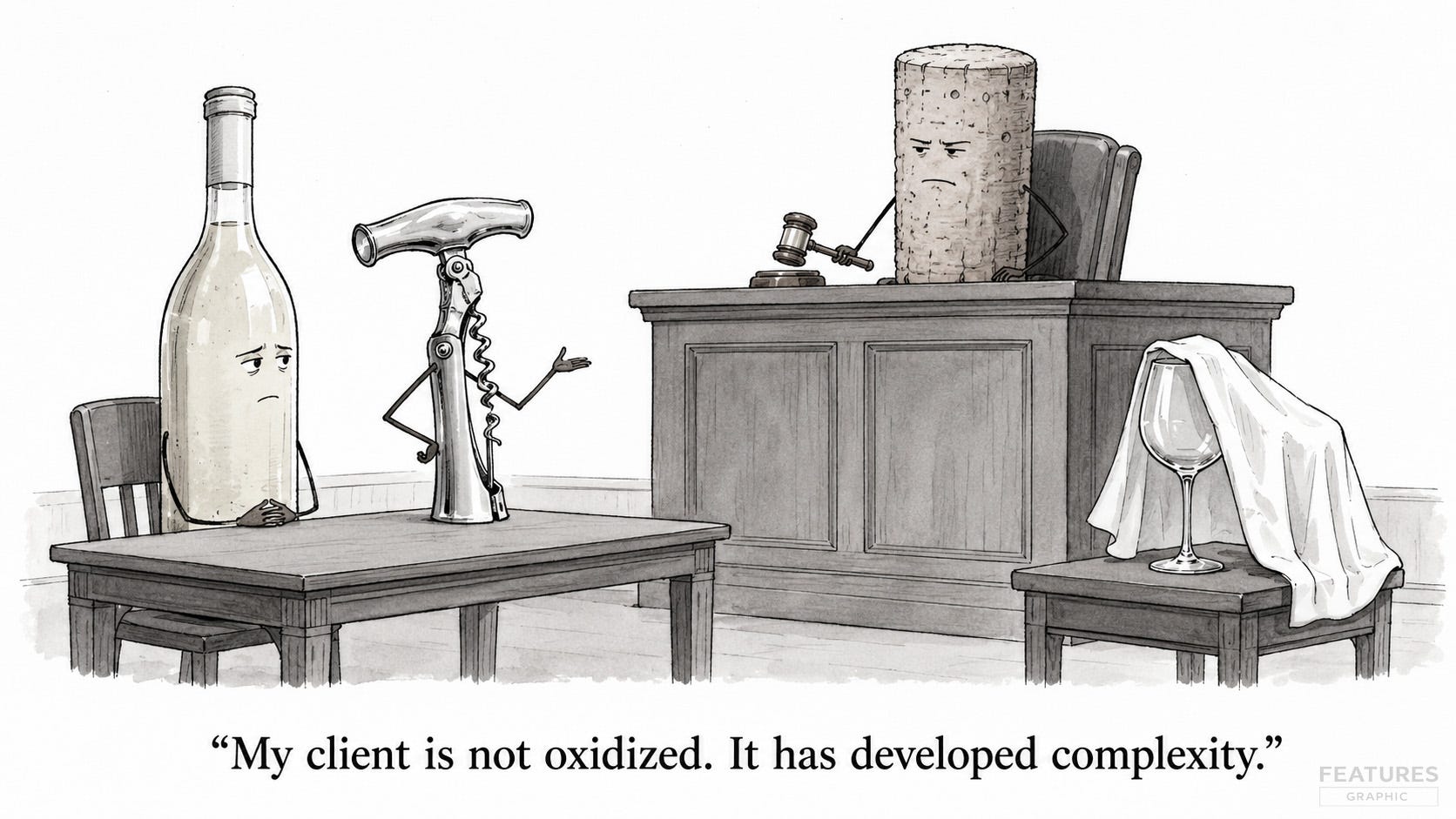
A decade ago, after a tasting of natural wines, I was convinced that most winemakers who believed in the concept didn’t care if their wines smelled a bit like vinegar. Today the natural-wine template has changed. Some natural wines generally are not flawed as they once were. I think the natural-wine movement has taken the proper turn and has “cleaned up its act.” Many of the wines are sound and more personality-driven than some of the more sanitized versions.
Of course, it is true that some natural wines can be a little hazy, cloudy or not particularly pristine. I don’t care. I do not drink what the wine looks like. I like reputable aromas and interesting tastes, and the natural-wine movement is clearly (pun intended) headed in the right direction.
It has been roughly 35 years since the advent of modern technology’s impact on the fine-wine business, according to Roberto Frega, a senior researcher in philosophy at the Centre National de la Recherche Scientifique in Paris. In his book called “Post-Natural Wine” (available only in French), Frega says the ultra-modernization of wine has produced “wines that … cost hundreds of euros, and even the critics most hostile to the [modern] model acknowledge that they are successful.
“The objection is not about quality; it is about the variety of the world. That model spread a uniform idea of excellence and made wines born in very distant places resemble one another.” He says a goal is reproducibility. Or uniformity.
But from what I have read, advocates of natural wine are less interested in that kind of thing. Uniqueness seems to be a part of the natural-wine movement. This may call for buyers to be more accepting of distinctiveness, but isn’t that what wine is all about in the first place?
Frega’s philosophical approach defines both classical modernistic (technology-enhanced) winemaking and the opposite approach (natural winemaking), which avoids most modernistic winemaking tactics. Frega then introduces a third construct, which he identified as post-natural, which permits aspects of both previous categories.
Roughly 25 years ago I began to investigate natural wine here and in Europe. Much to my economic detriment, I was dismayed by the imprecision of most natural wines.
Most of the aromas made the wines difficult to appreciate. I didn’t understand how the concept of terroir could possibly play a role in a spoiled wine. But now I sense a growing awareness on the part of many natural-wine producers to be more perceptive to spoilage components that blunt the ultimate message — that natural wines can be produced that display not only character but are unique because they are not like others.
A few perceptive wine collectors once told me that natural wines must be free of flaws if they are ever to capture the attention of consumers who are knowledgeable enough to understand what’s really happening. Today some of those people say that sameness in style is equivalent to boring-ness.
What is really happening is that very little manipulation is being done in the natural-wine world simply to make the wine look and smell like more expensive models. Again, consumers should be prepared to accept distinctive elements.
About 15 years ago, I heard a winery owner tell a group of potential investors that his goal was to make a wine as good as Château Latour. Perhaps the investors were impressed by that remark, but the resulting product in the years that followed reminded me of a Ferrari made out of Legos. It might look fine from 100 yards away, but when you get close to it, you realize that it’s not a car.
Part of the question in making a wine is: What is the goal? Is it the admirable objective of making a distinctive wine that shows the personality of the soils from which the grapes emanated, a wine that pays homage to local lore and to history? Or is it the more cynical strategy of making a faux example, a knockoff, an icon that would likely only fool rank amateurs? A wine that gets 99 points? And sells for hundreds of dollars a bottle?
The more I look carefully at the California wine trade and all of the curious versions of it that have sprung up over the last 50 years, the more I am convinced that the natural-wine movement in the United States is slowly beginning to understand that spoiled wine is not how their reputation will be built and their legacy maintained.
And I’m also seeing that the more conventional wineries in the United States are beginning to recognize, too, that the weakness in sales we have witnessed over the last few years might be partly due to their blind dedication to homogeneity, sameness and crystal-clear appearance, which may have created some of the ennui of the American consumer who once, not long ago, supported domestic spiritus frumenti.
About 35 years ago, I wrote a column noting that about one bottle out of every four sold in this country (25%) was an import. Today, imports represent roughly 40% of the wine sold here. Not all of it is completely pristine. Many of the wines are considered rustic. Dedicated euro wine-buyers occasionally say they appreciate some of the funky smells these wines deliver.
Not all of them are Bordeaux and Burgundy. The proliferation of imported wines produced from distinctive grape varieties is ample proof that consumers are looking for something other than the same old stuff — even stuff that isn’t completely unblemished.
There is a message here.
—
Dan Berger has been writing about wine since 1975.
Wine Discovery:
2022 Oberon Merlot, Napa Valley ($29): Classic dry red wines can be produced so that they are best compared with a Sousa march, complete with its explosive contact with new oak barrels (smoke, bacon, etc.), excessive alcohol and questionably low acidity. This delightful dry wine is a handsome 180-degree opposite, a companion to Debussy. It offers black cherry and traces of green olive, both of which are varietally precise and which enhance red-meat dishes compatibly. The secret, besides excellent acid, is only 13.9% alcohol, which may shock a few people who expect the wine to be soft and sweet. Instead, it delivers exactly what Napa did 50 years ago when merlot was dry and pleaded with the consumer for appropriate protein-based foods. Long-time winemaker Tony Coltrin and winery president Michael Mondavi should take the credit for this beautiful reflection of Napa Valley’s legacy. Bottle Barn in Santa Rosa has it for $22.99. — Dan Berger
Today’s Polls:
Explore These Related Articles:


Browse All Napa Valley Features Stories
The views, opinions and data presented in this article are those of the author and do not necessarily reflect the official policy, position or perspective of Napa Valley Features or its editorial team. Any content provided by our authors is their own and is not intended to malign any group, organization, company or individual.
Our illustrations are produced through a multistep process of generative tools, digital sketching and photo editing, often starting from our own images or sketches.
There is a difference between the average, occasional wine drinker and wine professionals and connoisseurs (especially those with money). As wine writers, Dan and I taste many wines a week, usually daily tastings. Even well-made wines can get boring when several wines at a tasting are good but largely the same. The outlier gets our notice, maybe our praise. The average consumer comes at the experience from an entirely different perspective. Often, they want consistency, something they like and order consistently because it is their safe play. And because they enjoy it for their occasional wine drinking. In general, if a winery makes wine for wine writers and wine connoisseurs, they may survive. If a winery makes wine aimed for the less sophisticated tastes of the general public, they have a better chance of prosperity.
While I agree with many of Dan’s comments and the non-use of additives to wine (other than sulfur) there are some generalizations that stand out. Filteration isn’t just about clarity, like sulfur, it’s about stability. Many of the issues with natural wines are that they avoid sulfur and filtration. This can lead to premature oxidation and re-fermentation from Brettanomyces as well as mousy character. I agree that natural wines as a category has evolved to be less of a ‘box of Chocolates’ the. In the past. Filtration like sulfur does NOT decrease ageabilty. After 30 years of making wine from properties around many regions and countries it’s a universal tool whether or not yo use it regularly or need it. Wine quality is and should be a function of stability thus if one needs to filter they should. David Ramey may not own a filter BUT he sure knows where to rent one or has a third party company to do it for him. If he doesn’t then he’s using Velcorin (https://en.wikipedia.org/wiki/Dimethyl_dicarbonate) which to me is what we should be avoiding. It’s the ‘round up’ of winemaking and for folks that want to say unfiltered yet the wine would be unstable without it. Technique and careful observation is what’s needed regardless of your wine category or style. Additives should be avoided and terroir should be preserved and cultivated carefully.