

Wine Chronicles: Dancing Crow — Engineering Fluidity in a Destabilized Wine Market
By Tim Carl

Summary: Dancing Crow Vineyards has restructured its production and sales model in response to tightening credit, shifting demand and margin pressure across the wine industry. Under Scott Kirkpatrick, director of operations and winemaking, the winery now produces roughly 40% to 45% of its crush at its Hopland facility while continuing to custom-crush its largest-volume sauvignon blanc program. The company sources much of its fruit from its Lake County vineyards near Kelseyville and sells through a mix of national distribution, a wine club, Costco and about 35 weekly farmers markets, creating multiple revenue streams designed to remain responsive as conditions shift. Founder Tony Cartlidge’s decades in wine inform a strategy built less on exclusivity and more on movement — and the winery says that structure is now driving unusually strong growth in a difficult market.
KELSEYVILLE, Calif. — Fluidity is not a word most wineries use to describe how they operate. The work is seasonal, the investments are long-term and the costs rarely bend.
“It is no secret that the industry is in a sort of upheaval,” said Scott Kirkpatrick, Dancing Crow’s director of operations, winemaking and national sales. “It is not easy to be a winery right now.”
In response, Dancing Crow Vineyards has tried to engineer a business structure that can shift quickly — in production, distribution and inventory — without forcing the company into bets it cannot unwind.
Over the past few years, the Lake County-driven label has reshaped how it produces wine, how it moves wine and how it manages capital, an effort to reduce rigidity in a period when neither demand nor financing feels predictable. The impact is showing up in rare momentum for the moment: Founder Tony Cartlidge said the winery recorded about $3.5 million in sales last year and is projecting roughly $7 million this year.
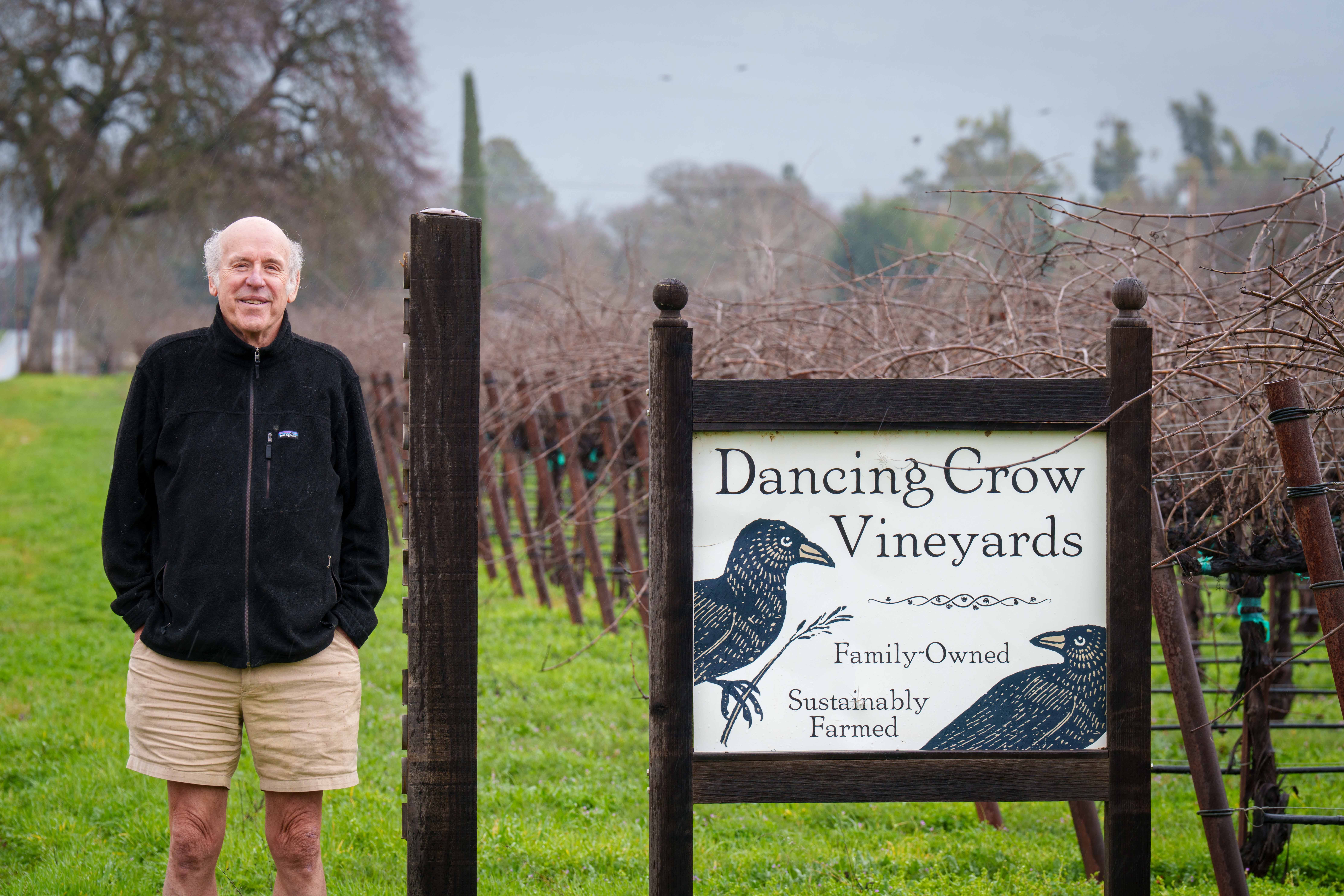
Hybrid Production by Design
Cartlidge co-founded Cartlidge & Browne in 1980 with Glen Browne; the brand was acquired by Vintage Wine Estates in 2011. In 2014, Cartlidge and his wife, Sarah Forni, together with their family, launched Dancing Crow, built around Lake County vineyards near Kelseyville and a value-driven sauvignon blanc program.
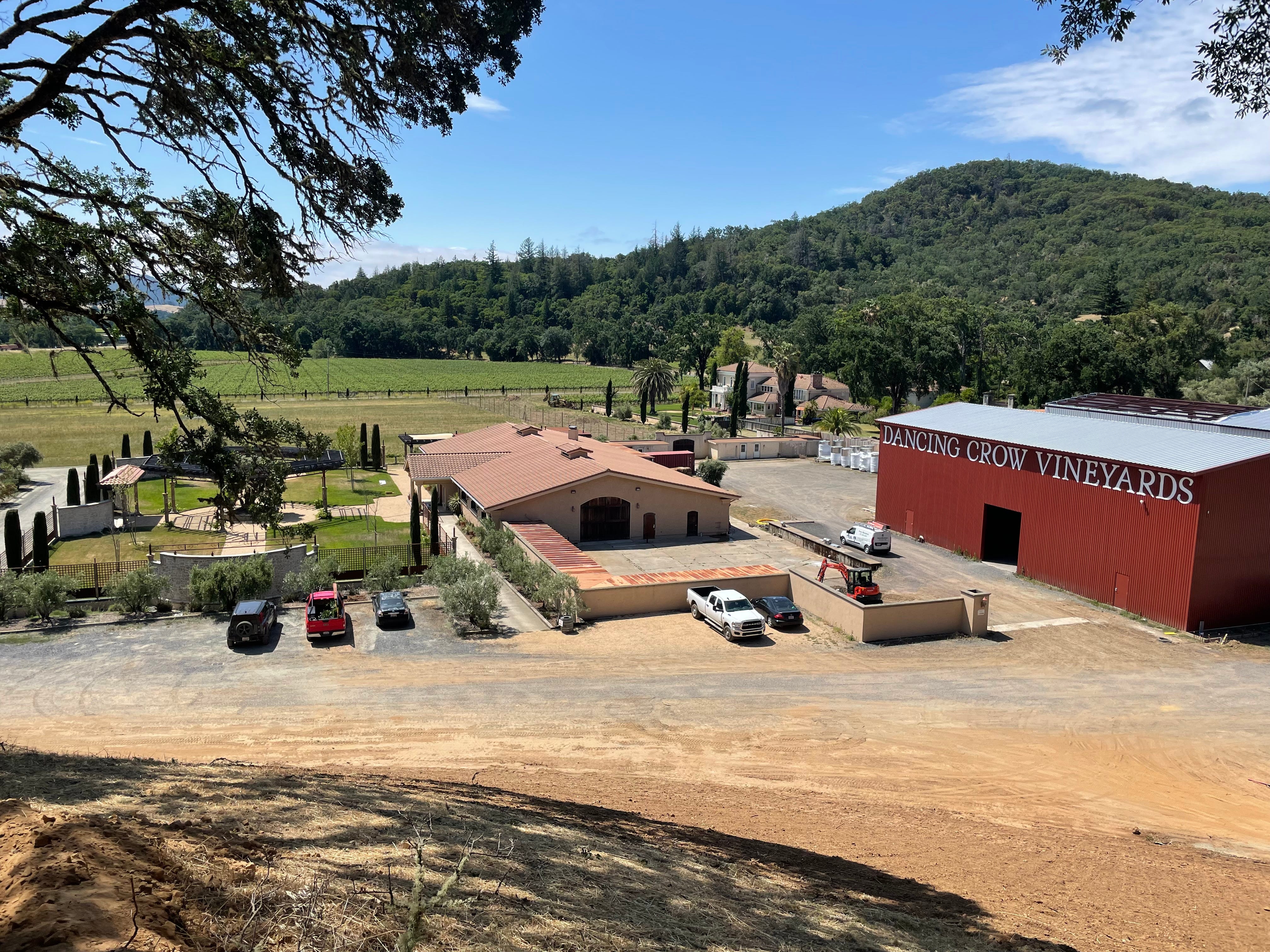
In October 2022, they purchased a 45-acre property in Hopland and took occupancy Jan. 1, 2023. The winery was built out in time to begin using it for the 2023 vintage.
“Doing that has allowed us to have our own home for the first time as well as allowed us to have full control over our winemaking,” Kirkpatrick said. “It obviously comes with a number of challenges, especially with cash flow, but it has been really rewarding to see our quality elevate with this change.”
The move did not eliminate custom crush. The Hopland facility is not engineered for large-volume intake. Reds and smaller white programs are produced there, while the winery’s largest-volume wine — sauvignon blanc — continues to be made primarily at a high-capacity custom-crush facility.
“We are currently doing about 40% to 45% of our crush at our own winery, which is a big step up from the 0% that we used to do,” Kirkpatrick said. “Really, it’s just the sauvignon blanc program that is still custom-crushed. It would have been several million more dollars of capital investment to engineer the facility to work with our SB program.”
Rather than build for maximum throughput, the winery chose selective control. Smaller lots are internalized; volume relies on existing infrastructure. The result is a hybrid production model that protects capital while increasing oversight where it matters most.
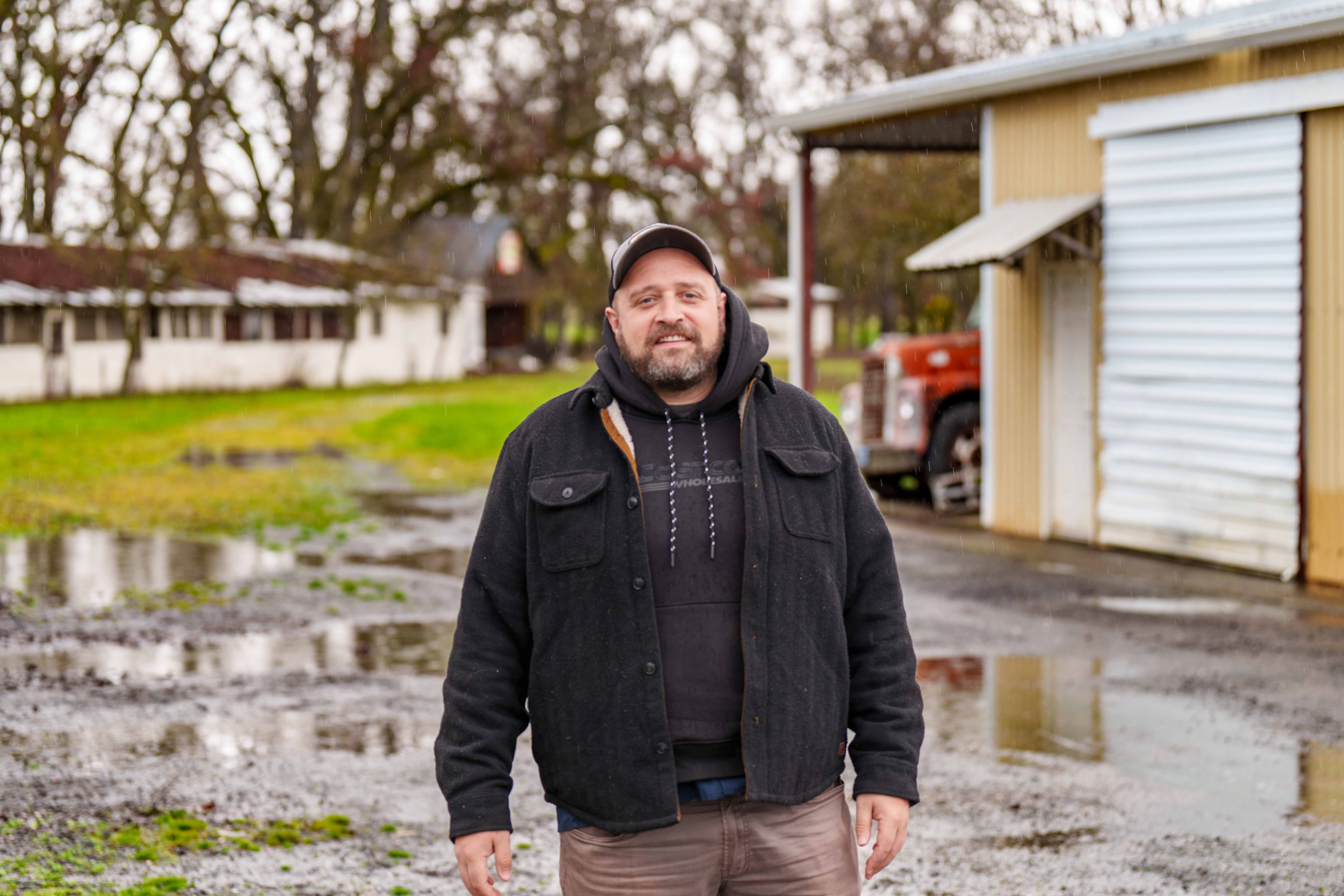
Diversified Channels
Production flexibility is mirrored in distribution — and the most unusual piece of the system is also the most visible.
In addition to national distribution and a wine club, Dancing Crow pours at roughly 35 farmers markets across California. Under California law, licensed winegrowers may sell bottled wine and conduct limited instructional tastings at certified farmers markets, provided they hold the required permits and enforce age verification. Cartlidge said tastings are capped at 3 ounces.
Most of the markets operate year-round, though a handful are seasonal. Cartlidge said the winery expects to add more markets this year, including several in San Diego County.
“Holding onto large amounts of inventory might just be the most dangerous thing a winery can do these days.” — Scott Kirkpatrick
What began as an experiment has become a managed system. The winery promoted one of its market sales staff into a dedicated role overseeing all markets and employees — a shift Kirkpatrick described as crucial to operating at that scale effectively. The markets, he said, have improved as the team became more organized and intentional, and they have delivered a secondary benefit: wine club sign-ups.
“Pouring and selling our wines has allowed us the opportunity to go to where our customers already are and meet them there instead of constantly waiting for them to come to us,” he said.
Cartlidge, looking at the same landscape, framed the channel mix in blunt terms.
“Over a cliff for many, but some people are making a course correction to avoid this cliff,” he said. “I think it’s essential to find one’s niche and put all available energy into it. In our case, primarily farmers markets and Costco, which are curiously synergistic.”

Costco is the other major volume lever. Dancing Crow began working with Costco in Northern California in 2017 and expanded into Southern California locations in June and July 2025, Kirkpatrick said. The retailer provides consistent volume at price points aligned with value-conscious buyers.
For many winery owners, Costco carries reputational risk — the concern that aggressive retail pricing can compress margins and erode brand image. Dancing Crow’s approach separates volume from scarcity. High-throughput sauvignon blanc moves through Costco, while limited-production wines remain confined to farmers markets and club channels. The segmentation is designed to protect both cash flow and brand hierarchy.
“Selling our wines only through Costco would not be a sustainable strategy for very long,” Kirkpatrick said. “But as a part of the mix it’s a very powerful channel.”
Cartlidge argues that Costco’s economics are part of why the channel behaves differently from a conventional retail shelf.
“People pay a membership fee to be part of Costco,” he said, describing that membership model as part of the value proposition members expect when they buy there. “They provide their members exceptional consistent value.”
He also described a second, operational layer: what Costco calls road shows, where wineries can staff in-store tastings and promotions. Cartlidge said Dancing Crow uses its farmers market team — the people already trained to present the wines — to do road shows in Costco stores several times each month.
Today’s word puzzle:
Challenge your vocabulary with this week’s mystery word. Submit your answer in the poll and check the bottom of the page for the correct answer.
Three Wines, Three Scales
With the channel architecture in place, the pricing and production strategy comes into focus bottle by bottle.
The 2024 Dancing Crow Vineyards Big Valley District Sauvignon Blanc — the winery’s primary Costco offering — is produced at the custom-crush facility. Approximately 12,000 cases were made, with an MSRP of $20; Costco has sold it for about $10.99. The wine is fermented and aged in stainless steel and bottled at 13% alcohol.
By contrast, the 2023 Farmer’s Cuvée Sauvignon Blanc, sold primarily through farmers markets, is produced at Hopland. Roughly 1,000 cases were made. The wine spends 14 months on lees, including time in a 900-gallon French oak foudre, and is bottled at 12.5% alcohol. MSRP is $35.
At the smallest scale sits the 2024 Long Valley-Lake County Viognier, produced at Hopland from two barrels, or about 50 cases, and sold largely through the winery’s club at $40.
The spread — 12,000 cases, 1,000 cases, 50 cases — illustrates segmentation by channel and production scale. Volume sauvignon blanc moves efficiently through large retail accounts. Smaller lots remain under tighter in-house control. Limited wines reinforce direct relationships.
There is a line that circulates in the wine business, half as a joke and half as a warning: You can make money from wine, or you can make wine from money. In a destabilized market, the distinction lands differently. Dancing Crow’s structure — a volume outlet paired with weekly direct selling and a club channel — is built around movement rather than assumption.
Capital, Credit and Inventory Discipline
The emphasis on movement reflects financial realities.
Kirkpatrick said the winery was not working with Silicon Valley Bank but was pursuing a refinance when its bank’s wine-lending division was eliminated. He described a broader tightening in wine lending following SVB’s collapse and said capital availability has directly affected winery operations.
“With less cash availability and tightening margins, we did reduce our production on a few SKUs in order to get caught back up to stock levels that made sense for us and the bank,” he said.
Prices have been raised selectively, he said, but by less than underlying cost increases. The winery has focused on keeping inventory lean.
“As for inventory management, the goal is to hold less inventory and not more of it,” Kirkpatrick said. “Holding onto large amounts of inventory might just be the most dangerous thing a winery can do these days.”
Kirkpatrick said the winery’s current growth is not only about making more wine; it is also about moving what it already has more quickly.
“It doesn’t require us doubling our production,” he said, describing a model that may involve increasing production but also turning through inventory faster. “Sauvignon blanc, we love to get bottled within six months of harvest and get it out there. Being in control of your timing is a real luxury.”
Lake County as Cost Leverage
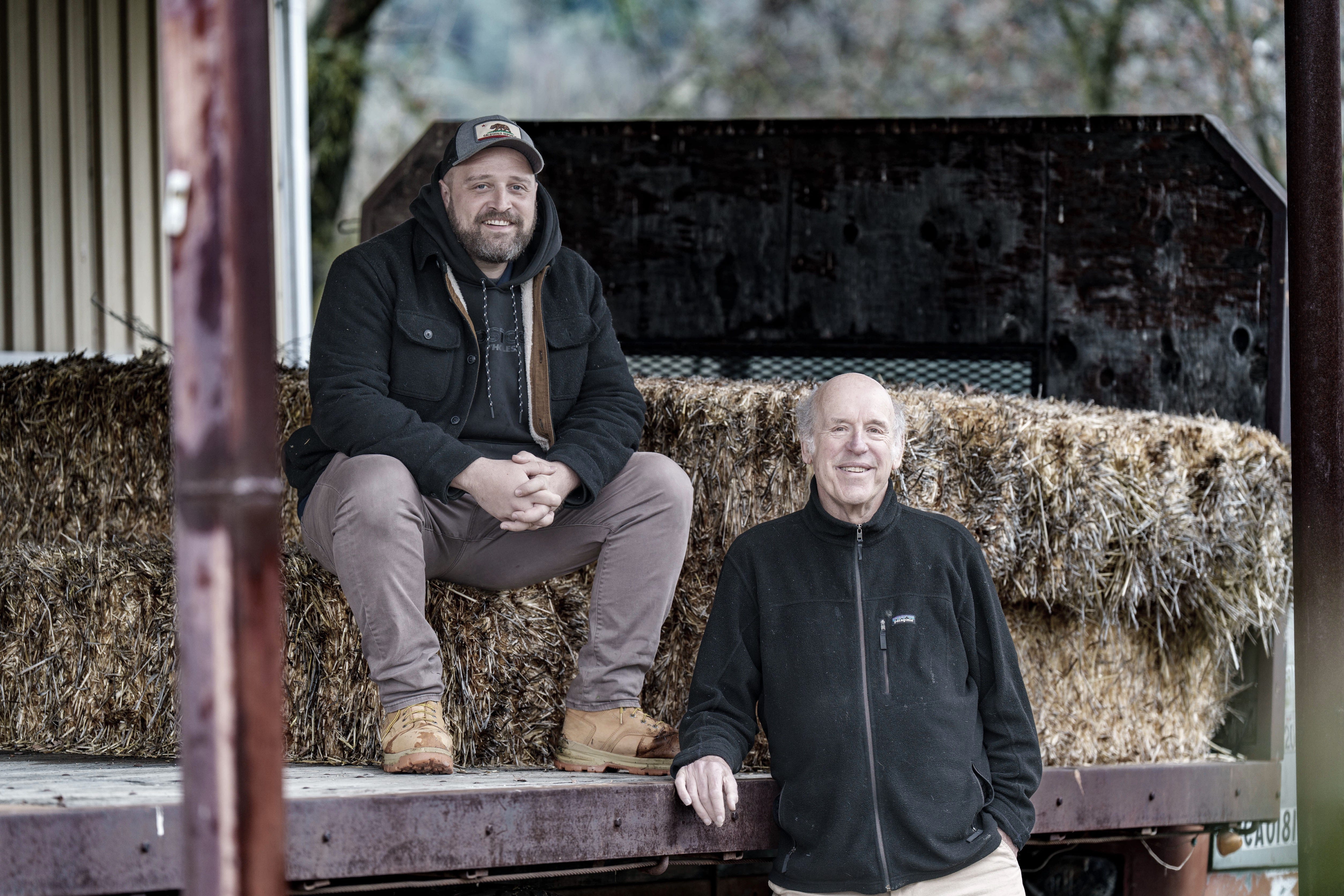
The winery’s operating base is in Hopland, but its core farming story is in Lake County. Much of Dancing Crow’s fruit comes from its vineyards near Kelseyville, including sites on the western shore of Clear Lake.
Underpinning the structure is Lake County fruit, which Kirkpatrick argues delivers a rare combination in today’s market: quality that can compete stylistically with more famous regions and pricing that still pencils out for wines consumers will buy.
“First off, there is nowhere in the U.S. that has the depth and breadth of volcanic soils as Lake County,” Kirkpatrick said, pointing to the county’s altitude, subregional diversity and what he describes as growers’ “dogged pursuit of improvement.” He noted that the Dancing Crow vineyard sits near 1,400 feet on the western shore of Clear Lake.
Over the last five to six years, he said, Dancing Crow has averaged roughly 25,000 to 35,000 cases annually, with much of that coming from sauvignon blanc — a program the winery believes is tailored to Lake County’s strengths.
Cartlidge frames that value proposition in both stylistic and economic terms. He argues that Lake County can produce sauvignon blanc with a more restrained profile — lower alcohol, mineral-driven, less overtly aromatic — that is difficult to achieve consistently in warmer, higher-cost regions.
“I think there is a compelling argument that sauvignon blanc from Lake County — picked at 21 brix — is the best example of a Sancerre-style sauvignon blanc in America at any price,” he said. “Lake County cabernet also has the potential to rival cabernet from Napa at the fraction of the price.”
Kirkpatrick sees the county’s relative affordability as a structural advantage rather than a limitation. In his view, Lake County has not been priced into a luxury cost structure, and that is precisely what makes it viable now: Growers can still farm with serious intent, and wineries can still build wines at accessible prices without treating every bottle as a scarcity play.
He also links Lake County’s under-the-radar status to how younger consumers increasingly make buying decisions. Kirkpatrick argues that many younger buyers are not looking to purchase the same prestige bottles their parents aspired to collect; they are looking to discover something authentic that represents value — and to share that discovery with peers. Lake County, he said, fits that psychology because it remains less burdened by preconceptions and high cost.
Cartlidge has seen that dynamic in the farmers markets, where he says the buyers drawn to the wines often skew younger than conventional tasting-room traffic.
“We notice in farmers markets the demographic that is attracted to our wines are the very people the media claims are not interested in wine,” he said, noting that the channel is helping introduce Lake County wine to drinkers who are less invested in inherited status symbols and more interested in what delivers in the glass.
Both the Dancing Crow Vineyard and Old Stake Vineyard are certified through the California Sustainable Winegrowing Alliance, Kirkpatrick said.
Experience as Structure
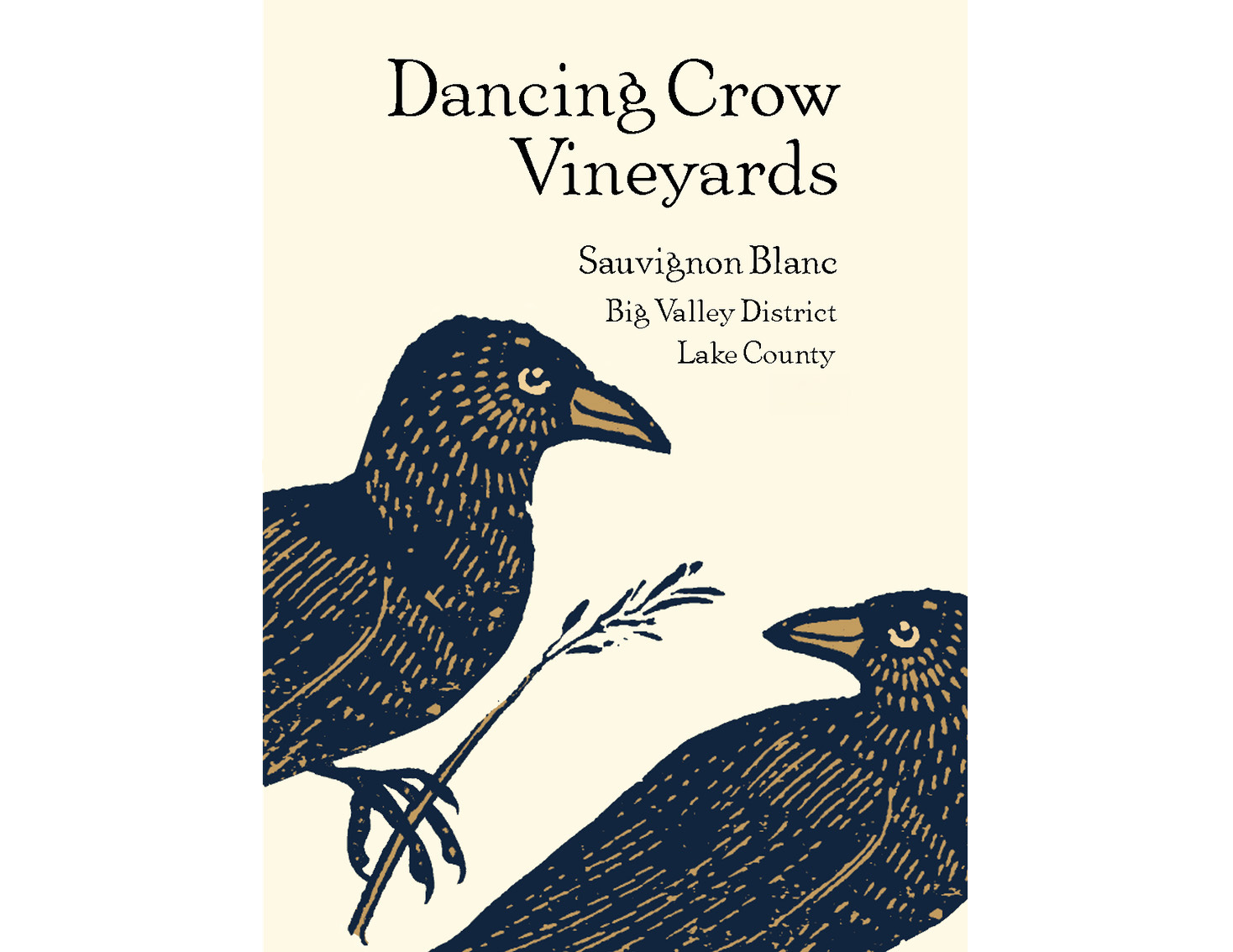
Cartlidge’s decades in wine do not function here as nostalgia. Instead, they provide context for structural decisions in a market that no longer rewards rigidity.
“In California, passionate small retailers have by and large disappeared,” Cartlidge said. “Direct to consumer is a much bigger factor than it used to be. A failure to appeal to younger generations of wine drinkers is also a big problem.”
Kirkpatrick said the disconnect is often less about taste than about how the industry approaches younger consumers. He argued that many younger buyers are not rejecting wine so much as rejecting the feeling of being marketed to by institutions that do not understand them.
What they respond to, he said, is simpler: “buying real products from real people who care.”
In an industry that for decades relied heavily on exclusivity and steady demand, Dancing Crow is betting on something else: movement. A winery that cannot move wine cannot remain viable, no matter how limited the bottling or how strong the pedigree. Fluidity, in this context, is not an aesthetic. It is a business discipline.
Wine Discovery:
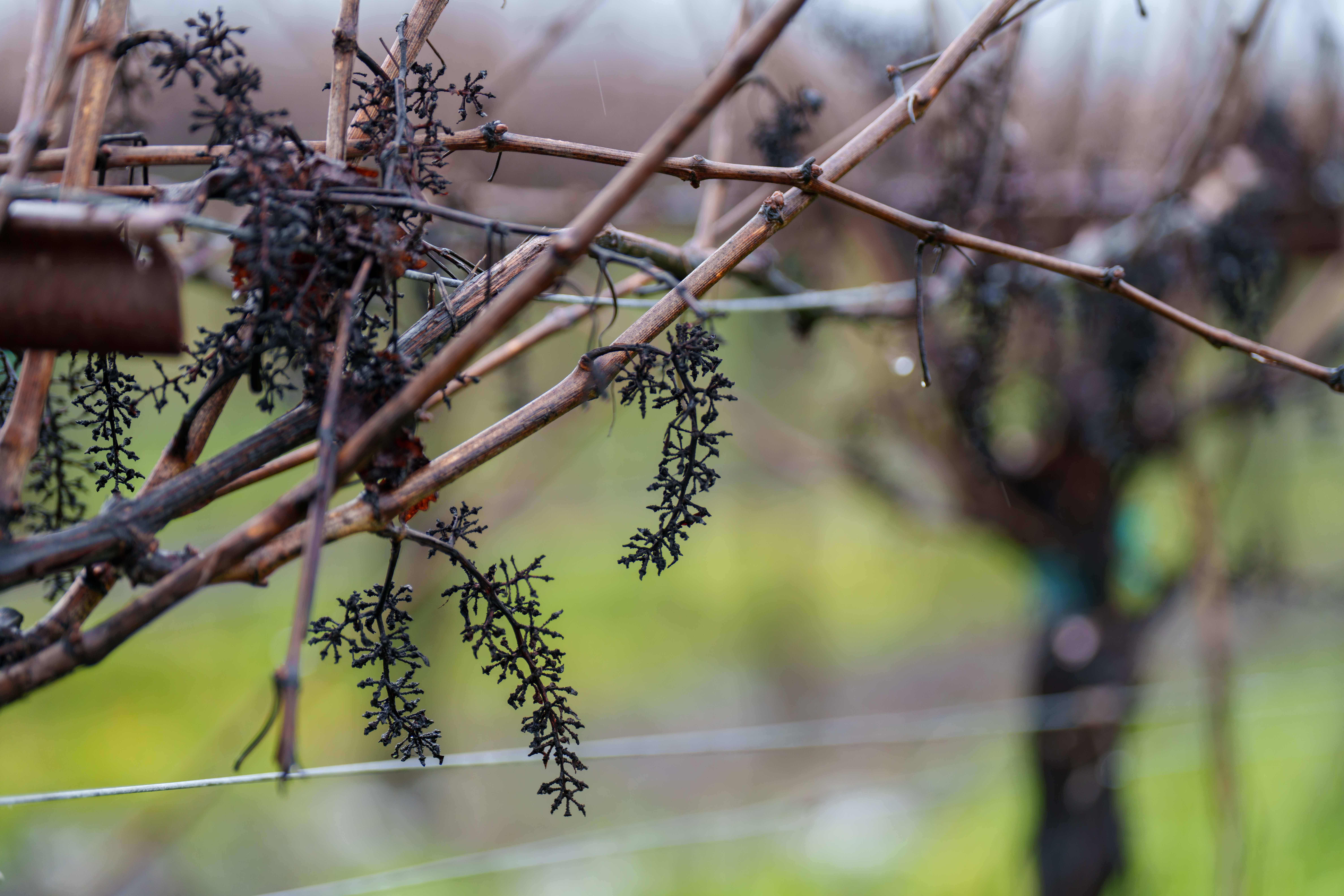
2024 Dancing Crow Vineyards Big Valley District Sauvignon Blanc ($20 SRP, about $11 at Costco, about 12,000 cases) —Sourced from Dancing Crow’s Big Valley AVA vineyards on the western shore of Clear Lake, grown at about 1,400 feet on clay, gravel and alluvial loams, then made at a custom-crush facility. Fermented in stainless steel, kept on its lees through élevage and bottled without malolactic fermentation — a program that leans into freshness and texture.
Aromas lead with orange citrus blossom, lemon and green apple, with a suggestion of white peach and a salty, stony edge. Clean and slick on the palate, it carries layered citrus and white peach fruit through a brisk, dry finish. Alcohol is 13%; acidity is listed at 5.8 g/L (pH 3.45), keeping it taut and food-friendly.
Drink it with ceviche or grilled shrimp, goat cheese and herb salad or roast chicken with lemon and spring vegetables. — Tim Carl review
—
Tim Carl is a Napa Valley-based photojournalist.
Today’s Polls:
Recent Poll Results:
In Dan Berger’s article “Wine Chronicles: At 20 Years Old, Napa Cabernets Make the Case for Balance,” 45% of respondents got the correct answer for what does the word “garrigue” mean?
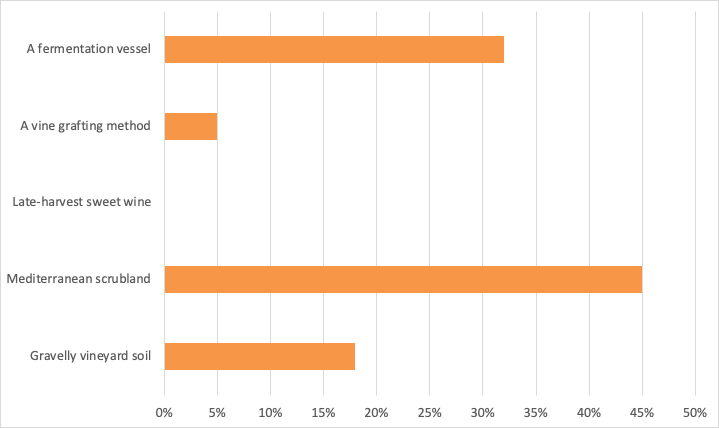
Summary: Meaning of garrigue. Mediterranean scrubland is the correct answer and leads with 45% of respondents. A fermentation vessel follows at 32% and gravelly vineyard soil at 18% while a vine grafting method draws 5% and late-harvest sweet wine receives 0%. Total responses: 44.
This Week's Word Challenge Reveal:
The correct answer is C: “Timing of seasonal life cycles.”
In agriculture and viticulture, “phenology” refers to the study of recurring biological events and how they relate to climate and seasonal change. For grape-growers, phenology tracks key stages such as budbreak, flowering, veraison and harvest. In Napa Valley and across Northern California, careful observation of phenological timing helps growers respond to drought, heat spikes and shifting growing degree days. It is central to understanding how climate variability influences ripening patterns, flavor development and picking decisions.
The word derives from the Greek “phaino,” meaning “to show” or “to appear.” It entered scientific use in the 19th century as botanists and naturalists began systematically recording plant and animal life-cycle events in relation to weather patterns. Today, phenology is a critical field in climate science, with long-term vineyard records providing valuable data on how warming trends are altering agricultural systems worldwide.
Explore These Related Articles:


Browse All Napa Valley Features Stories
The views, opinions and data presented in this article are those of the author and do not necessarily reflect the official policy, position or perspective of Napa Valley Features or its editorial team. Any content provided by our authors is their own and is not intended to malign any group, organization, company or individual.
Diverse controlled dynamics. It can be done successfully. Thank you for the very nice article Tim.