

Friday E-dition: Choosing Between Orwell’s '1984' and Ferber’s 'So Big'
By Sasha Paulsen

Summary: Sasha Paulsen reflects on her struggle to reread Orwell’s 1984, finding its dystopian vision too uncomfortably close to current events. Instead, she discovers hope in Edna Ferber’s “So Big,” a novel about resilience, motherhood and the quiet heroism of everyday life. Contrasting Orwell’s vision of oppression with Ferber’s depiction of perseverance, Paulsen chooses to focus on the Selinas of the world — those who cultivate life and hope despite hardship. Her faith is reinforced by personal joys: a rescue husky and a grandson discovering the world with wonder.
Two Books, One Future
By Sasha Paulsen
I have been trying since last January to reread George Orwell’s “1984,” but as the year closed out, I still hadn’t gotten past page 16.
This is cowardice, I know. Orwell wrote his chilling novel in 1949 as a warning against rising totalitarian power, using weapons of the thought police and mass regimentation to extinguish individuality, which is to say, humanity.
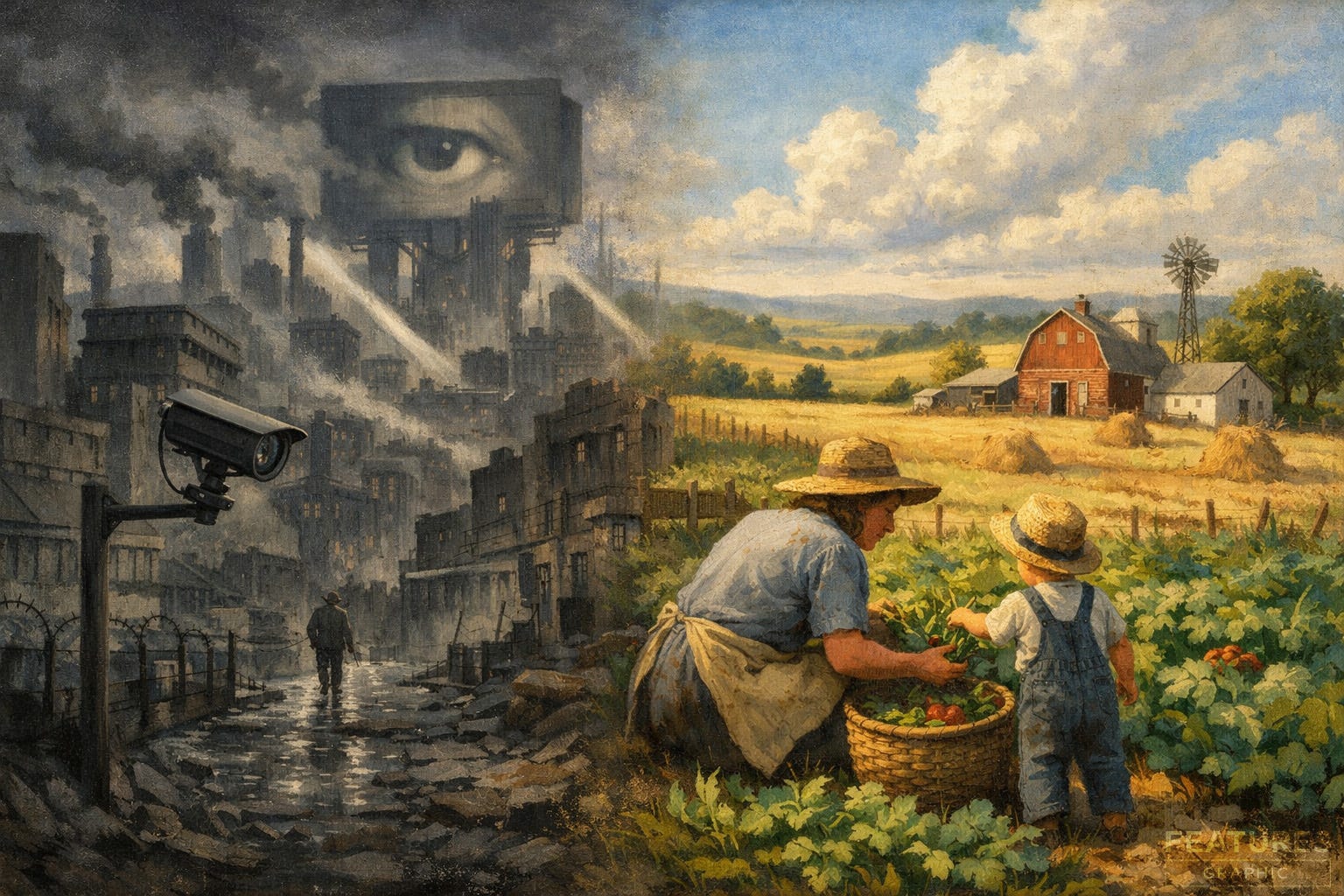
I first read “1984” in the 1970s, with a sense of moderate triumph. We might have had a flawed leader, but he was no Big Brother, and our system of government, so carefully planned, had prevailed: He was gone.
Reaching the year 1984, I thought, “Ha, we made it. Everything may not be peaches and cream, and, in fact, we might have the worst president ever, but we most likely have hit rock bottom in our democratic choice. Ahead lies the Age of Aquarius.”
Except here we are, in 2025.
Page 16 in my version of “1984” is where the doomed hero, Winston Smith, is watching the obligatory hate session on his surveillance apparatus. Big Brother, the face of the power controlling his life, appears, fades and then, “the three slogans of the Party stood out in bold capitals: WAR IS PEACE; FREEDOM IS SLAVERY; IGNORANCE IS STRENGTH.”
So here I stopped reading. It wasn’t just because I knew the plot, Winston’s futile, tragic rebellion, his worse fate. It was the bone-chilling blurring of the lines between Orwell’s dystopian nightmare and the daily news. Defense is war; empathy is weakness; science is banned; I love to hate.
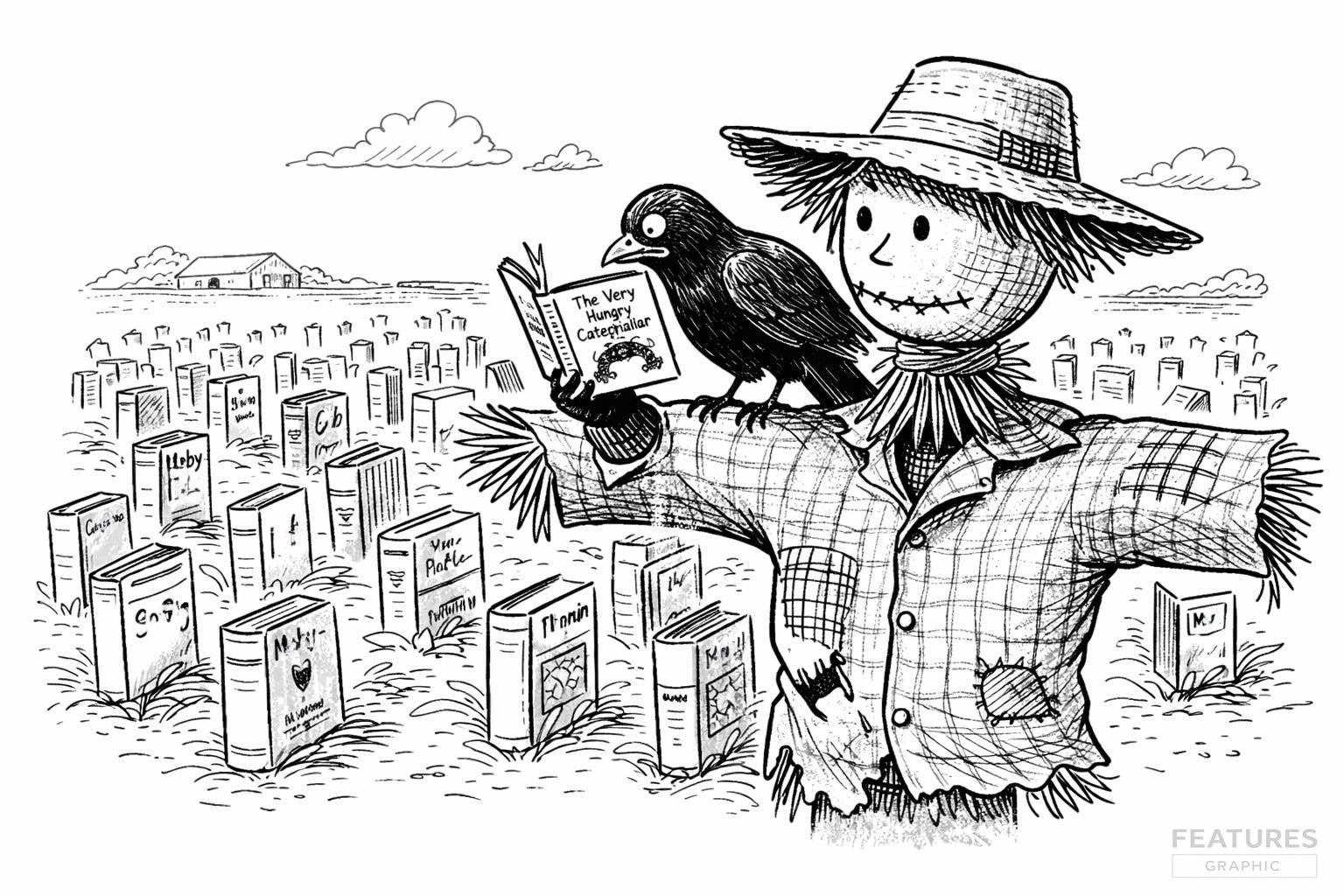
Consequently, instead of reading page 17, I began reading anything else I could find: “The Collected Works of Hildegard von Bingen,” “The Adventure of the Christmas Pudding,” “The Complete Poems and Songs of Robert Burns,” “The Troll With No Heart In His Body,” “Babar’s Mystery,” “How Democracy Dies,” “The Borrow a Bookshop Holiday,” “Seven Gothic Tales,” “The Very Hungry Caterpillar.”
Today’s Puzzler: Vintage Vocab: What’s Your Telos?
Some words don’t just describe the world — they define your place in it. This one has shaped philosophy, religion and maybe your to-do list.
Find the answer at the bottom of the page.
“1984” stared at me from the coffee table. From time to time, I’d open it again. And stop.
Then I picked up a book I had heard of, vaguely, but had never read; one of those that, if you missed reading it in high school, you might never do so: “So Big” by Edna Ferber.
A century-old novel that won the 1925 Pulitzer Prize, it’s the story of a woman, Selina Peak DeJong, who becomes a schoolteacher in a farming community of Dutch immigrants in Illinois. She marries a farmer and has a son, from whom the novel gets its name.
This comes about from an interaction between Selina — “a young woman, in a blue calico dress, faded and earth-grimed” — and her son — “a child of perhaps two years, dirt-streaked, sun-burned and generally otherwise defaced by those bumps, bites, scratches and contusions that are the common lot of the farm child of a mother harried by work.”
“Yet in that moment,” Ferber writes, “as the woman looked at the child there in the warm moist spring of the Illinois prairie land, there quivered and vibrated between them and all about them an aura, a glow that impart to them and their surroundings a mystery, a beauty, a radiance.
“‘How big is baby?’ Selina would demand playfully, ‘How big is my man?’
“He would smile a gummy though slightly weary smile and stretch wide his arms. She, too, would open her tired arms, wide. And they would say in a duet, ‘So-o-o-big!’”
So Big becomes Dirk DeJong’s nickname until he is 10. He has to fight himself free of it, his mother remaining the worst offender, “though her tone, when she called him So Big, would have melted the heart of any but that natural savage, a boy of 10.”
Widowed, Selina becomes a farmer on her own and sacrifices and struggles to give So Big the chance of a better life. Defying the odds — and expectations of her male farmer neighbors — she succeeds. What So Big DeJong makes of his opportunities is his own choice, but she is triumphant, a woman who lives by the sense of the innate beauty of life and the grand adventure of living.
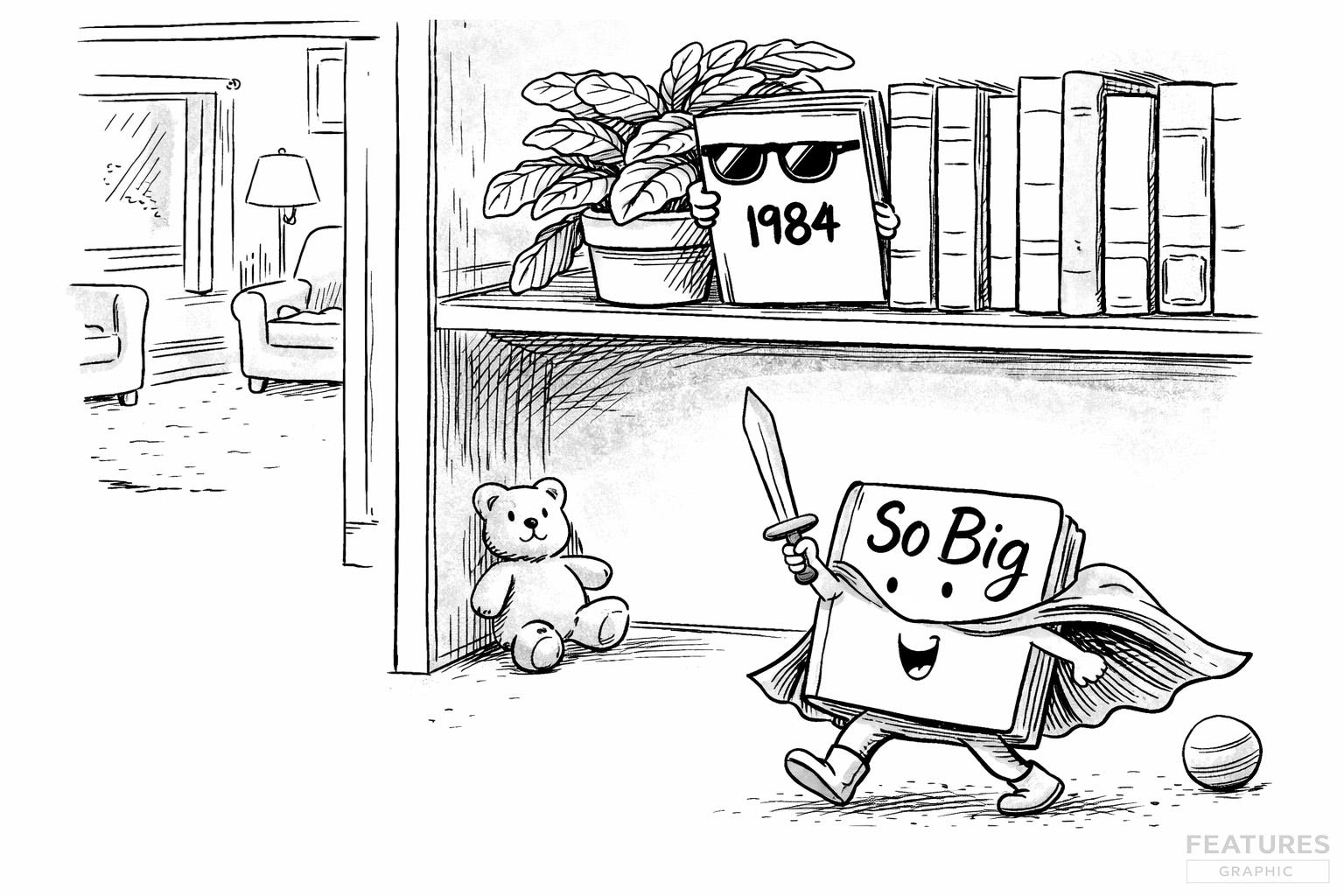
The contrast is great between Winston — starved, captured, tortured, destroyed — and Selina — valiantly growing vegetables in the heartland of America. And while we cannot ignore the plight of those being starved, imprisoned, tortured and destroyed by policies of would-be authoritarianism, I am starting this new year with a sense that there are far more Selinas (male and female) in America than those with temporary power might have anticipated. They won’t let evil — the destruction of this land we love — prevail.
My reasons go even deeper than the courageous judges, protestors and neighbors scrambling to help feed their hungry neighbors. It is grounded by the two new elements that arrived in my life this year: a rescue husky who starts every day with a reminder that life is a grand adventure (“Let’s go for a walk!”) and a grandson.
This fall, Logan, just over 1 year old, moved with his parents from a third-story apartment in Los Angeles to their new house in the South Bay. It has a most wonderful thing: a yard. The first time I visited, Luz, the husky, went along. Logan was cautiously enthusiastic about Luz. After a few minutes, he carefully patted her tail, and said, “Woof.”
We went outside. The pair began to explore their new world. Trailing along, I realized we were surrounded by miracles: The bark on a tree! A bed of rocks! Grass! A bird!
Logan, looking up at the huge blue sky, threw his arms open wide and tipped his head back so far, he knocked himself over and fell on the grass. Luz sniffed him and then went on sniffing trees. Logan lay on his back, laughing. Pure joy. So big.
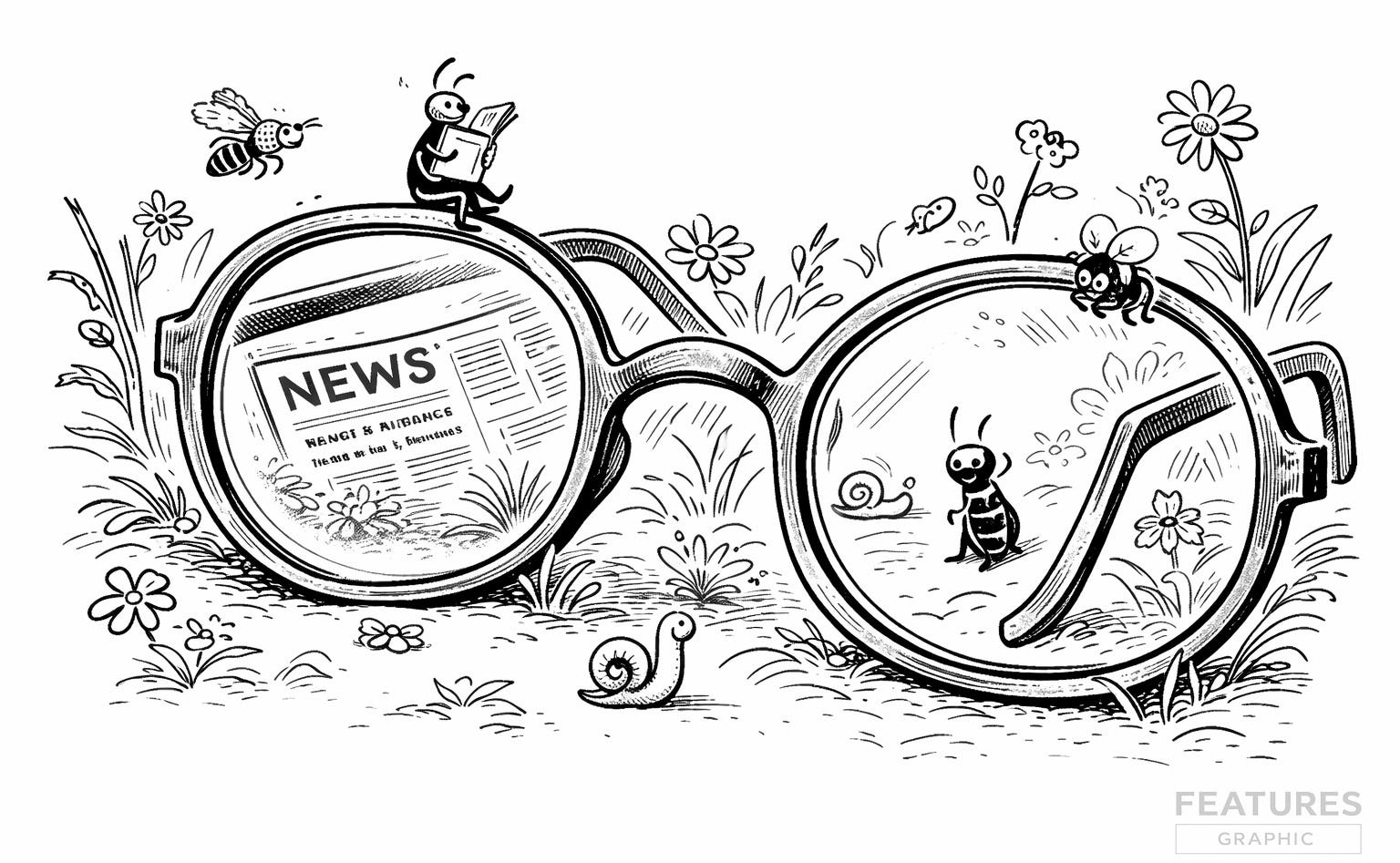
Heading into 2026, I don’t think it is hyperbole to write that we are locked in a battle — “1984” or “So Big” — for the fate of this planet, so tiny in the grand scheme of the universe and yet so big. I am going to place my bets and efforts on the side of “So Big.”
Postscript: The second time I visited Logan solo. When he saw me at the door, he held out his arms in a way that melted all the ice in my veins that had formed while I listened to the news on the drive. When I picked Logan up, he studied me intently, and then he said, “Woof?” The third time, I made sure to bring along Luz, aka, Woof.
—
Sasha Paulsen is a journalist and novelist who lives in Napa.
Today’s Polls:
Poem of the Day
“Night Song at Amalfi”
By Sara Teasdale
I asked the heaven of stars
 What I should give my love —
It answered me with silence,
 Silence above.

I asked the darkened sea
 Down where the fishes go —
It answered me with silence,
 Silence below.

Oh, I could give him weeping,
 Or I could give him song —
But how can I give silence
 My whole life long?
About the author: Sara Teasdale (1884–1933) was an American lyric poet known for her emotional clarity, musical precision and compact forms. Born in St. Louis, Missouri, she published her first collection, “Sonnets to Duse and Other Poems,” in 1907 and achieved national recognition with later volumes such as “Helen of Troy and Other Poems” (1911), “Rivers to the Sea” (1915) and “Love Songs” (1917). In 1918, she received the Columbia Poetry Prize, a forerunner of the Pulitzer Prize for Poetry, for “Love Songs,” which was also honored by the Poetry Society of America.
Teasdale’s work often centers on love, solitude, mortality and the inward life, rendered through lyrical simplicity and musical cadence. “Night Song at Amalfi,” from “Rivers to the Sea,” exemplifies her ability to distill deep emotional tension into brief, resonant verse. The poem reflects on the challenge of how to offer love in the face of unanswering silence, a theme central to her poetic voice.
Are you a poet, or do you have a favorite piece of verse you'd like to share? Napa Valley Features invites you to submit your poems for consideration in this series. Email your submissions to napavalleyfeatures@gmail.com with the subject line: "Poem of the Day Submission." Selected poets will receive a one-year paid subscription to Napa Valley Features (a $60 value). We can’t wait to hear from you.
Today’s Caption Contest
Pick your favorite caption or add your own in the comments below.
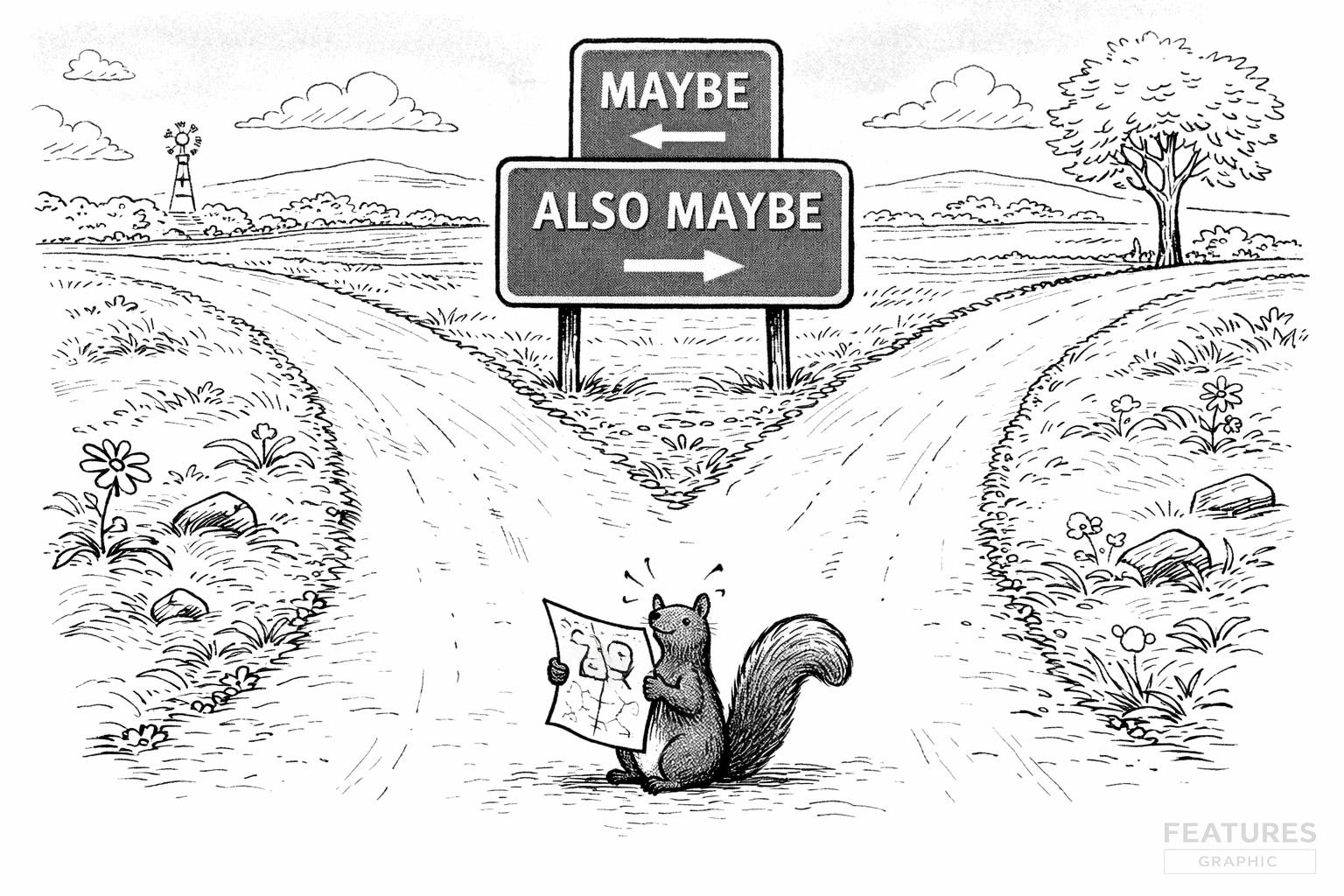
Possible Captions:
“I should’ve taken that left turn at Albuquerque.”
“Is there a third option?”
“Guess I’ll just sit here and panic politely.”
“Should’ve brought a magic 8 ball.”
“My horoscope did not prepare me for this.”
Last week’s contest results

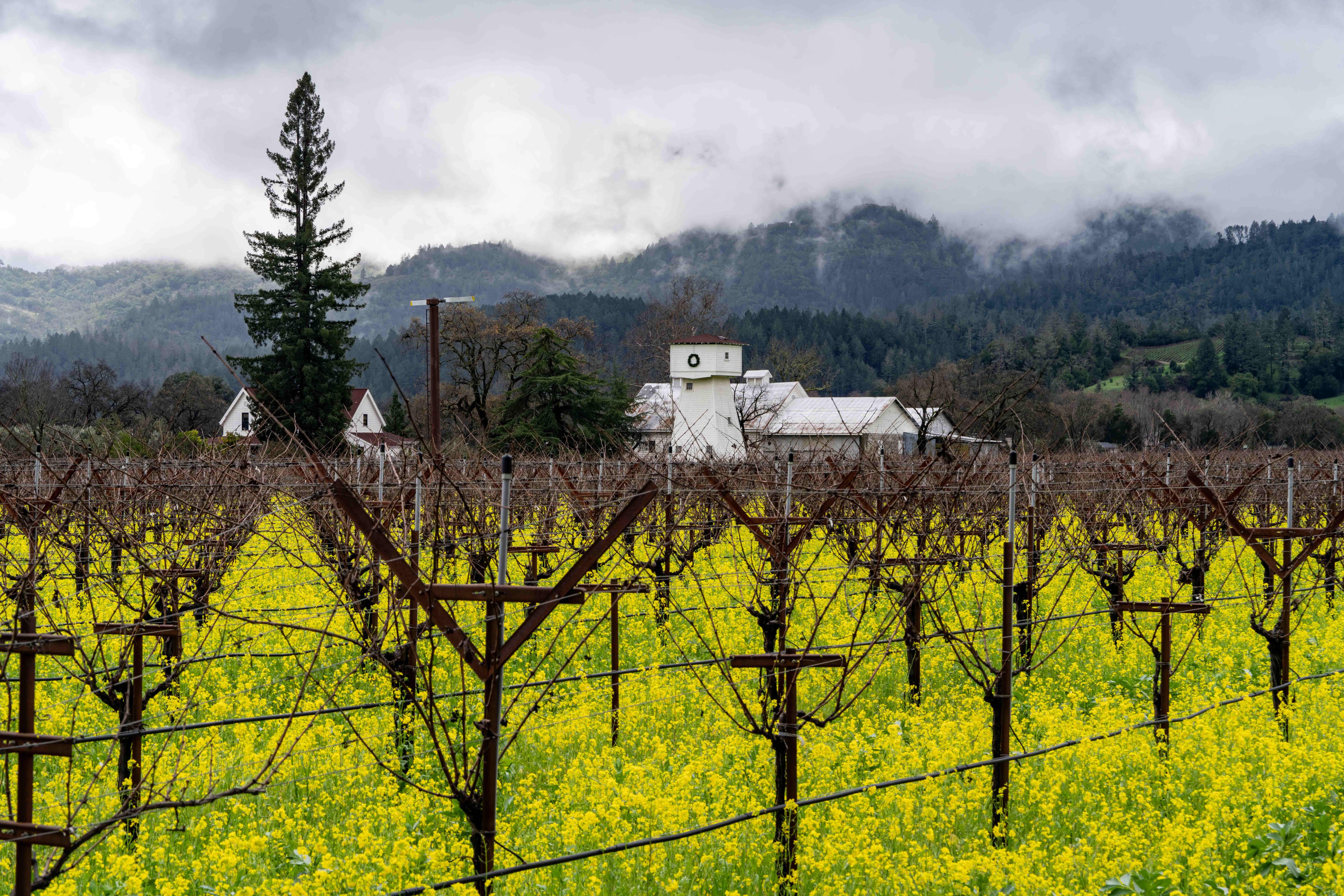
In “In a Noisy World, What Guides Us?,” the winning caption was “Maybe the signal’s not the problem,” with 32% of the votes.
Caption Options:
“You blink. I point.”
“Direction isn’t something you download.”
“Some of us still work in silence.”
“Maybe the signal’s not the problem.”
“Try looking up.”
Answer + Explanation
An ultimate end or goal
Telos (τέλος) is a classical Greek term meaning “end,” “goal” or “purpose.” In Aristotelian philosophy, every natural thing has a telos — a built-in end that guides its development and explains what it is for. Aristotle calls this the final cause: the “why” or the sake for which a thing exists. An acorn’s telos is to become an oak; a human’s telos is to live a life of rational flourishing.
In mythic terms, even the gods can be interpreted as having a telos. Apollo is not just a divine figure but a force of balance — through music, healing, prophecy, and the precise arc of a plague-bearing arrow. His roles, spanning from destruction to illumination, can be read as expressions of a single purpose: to impose order on chaos. His telos isn’t stated — but it radiates.
In this week’s essay, the tension between Orwell and Ferber is not just tonal — it’s teleological. One imagines a world stripped of meaningful ends. The other insists that meaning can still grow — even from dirt.
Explore These Related Articles:


Browse All Napa Valley Features Stories
—
The views, opinions and data presented in this article are those of the author and do not necessarily reflect the official policy, position or perspective of Napa Valley Features or its editorial team. Any content provided by our authors is their own and is not intended to malign any group, organization, company or individual.
Wonderful, Sasha! Simply wonderful!!! We all bow in admiration!!!
Sasha, so good. I always look forward to your essays. This one hit the mark once again. The parallels to 1984 are easy for everyone to see. NVF is a welcome antidote to what comes out of the Ministry of Truth (Minitrue) as Orwell called it. But more important than reminding us of Orwell's dark prescience is your calling us to embrace hope. I too have new grandchildren and am finding both the joy and hope you have found in yours. Keep writing and reminding. I remain convinced there are better days ahead, albeit not without travails.