


Summary: Five Senses, the modern Japanese restaurant chef-owner Spencer Conaty opened at 1227 Lincoln Ave. in Calistoga in July, has become a weeknight draw for the valley’s chefs, vintners and hospitality workers. Conaty, who was emancipated at 14 and wrote down a single goal — his own restaurant — came up through Morimoto Napa, Atelier Crenn and Saison before a decade of winery kitchens in Calistoga. Fish arrives six days a week, most of it from Japan, and the restaurant now sells more of its specialty Japanese fish than red tuna. Starting today, the restaurant takes phone orders for anything on the menu to go, Wednesday through Sunday from noon until close.
“I built this place to make you feel like you’re stepping into my home.” — Spencer Conaty, chef and owner of Five Senses in Calistoga
CALISTOGA, Calif. — On a weekday night at Five Senses, the room can read like a roll call of Napa Valley cooking and winemaking: Christopher Kostow and his family at one table, and Cindy Pawlcyn, who opened Mustards Grill in 1983, and her husband, John Watanabe, at another. Among the vintners who have turned up at the bar or in the dining room are Michael Honig of Honig Vineyard & Winery and Dick Grace, who co-founded Grace Family Vineyards.
Conaty said his cooks, all of them out of Michelin-starred kitchens, spotted Kostow the moment he walked in and sat at the sushi bar.
Kostow’s Restaurant at Meadowood in St. Helena held three Michelin stars, the guide’s highest rating, from 2011 until the 2020 Glass Fire destroyed it. He now runs The Charter Oak in St. Helena, Ciccio in Yountville and Loveski, a deli with three locations and plans for more.
“Everyone was shaking in their boots,” Conaty said. “All my chefs were cleaning their stations and trying to make sure everything looked perfect.”
He said he tries not to get starstruck, and he tells guests who ask whether he knows who they are that everyone who comes through the door is royalty to him. But the restaurateurs and winery owners coming back a second and third time have meant something.
“It really makes you feel like, wow, I did something right here,” Conaty said. “Doing this was the scariest thing I’ve ever done in my life.”
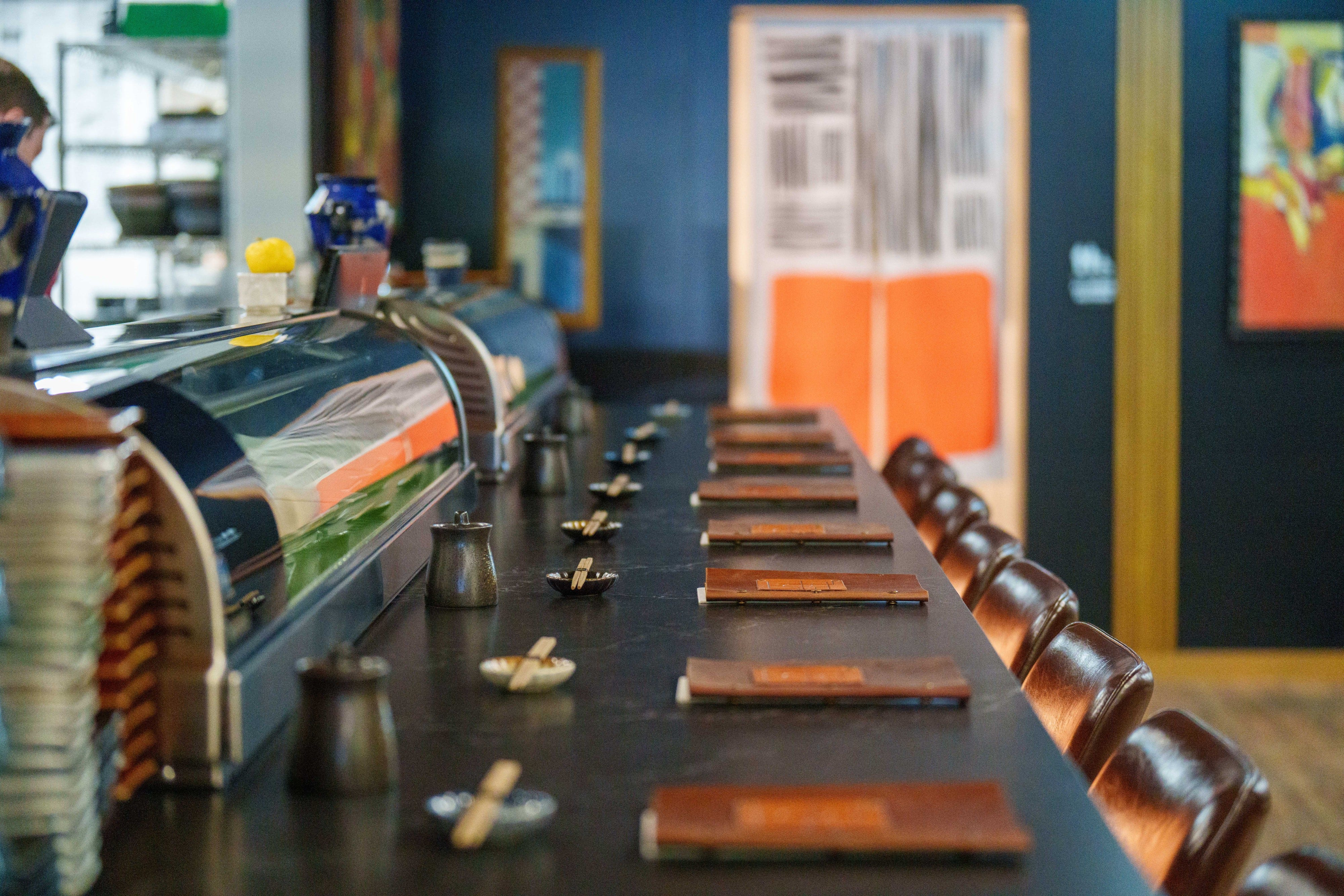
There are slower nights. But on the busy ones, the sound of the room makes the argument before the food arrives: glasses touching, the low hum of conversation and, behind the 25-foot sushi bar, the near silence of a kitchen running without wasted motion. Getting a reservation between 6 and 7:30, the restaurant’s busiest stretch, has started to feel like a small coup.
That is with no marketing at all. The sign is 2 feet square and hidden by trees Conaty cannot trim because they are not on his property. Some diners have told him the place is hard to find. He said he does not mind.
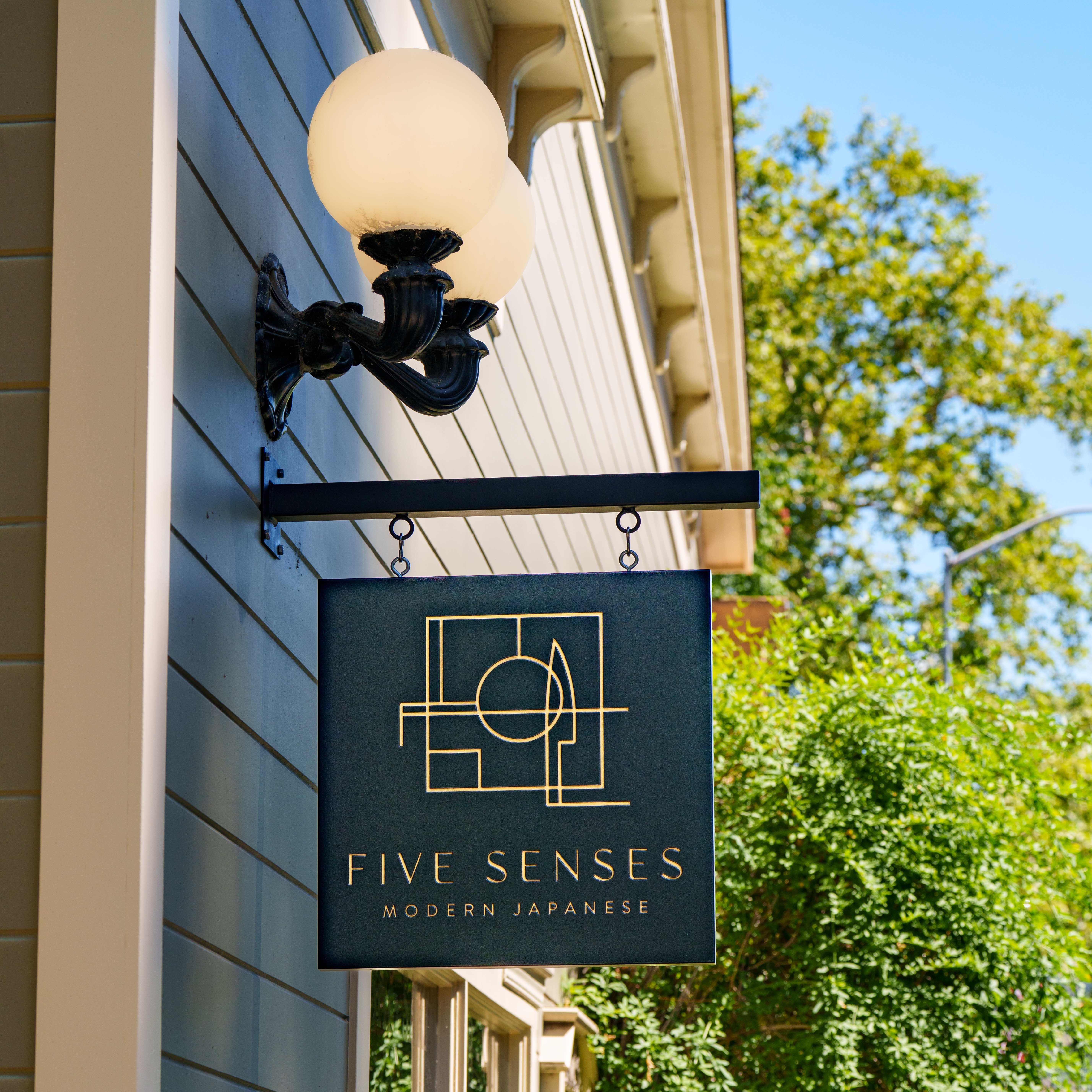
“Even though we’re not a Michelin-star restaurant, we still work like we are,” Conaty said. “I think sometimes those things that are hidden away, kind of hard to find, word of mouth — you kind of got to go on a journey to figure out where we are. I think that’s what helps us in a way.”
Before the opening, he said he could have gone the other way.
“I could have easily gone the route of opening up a Michelin-star restaurant where it’s a tasting menu only, 400 bucks a person,” Conaty said. “But I want anyone and everyone to be able to come and eat here.”
The sushi bar at the far north end of the valley is not in the city of Napa, and Conaty, 34, did not set out to draw the valley’s wine and hotel crowd, either. When Five Senses opened, his stated goal was a place Calistogans would use year-round, as Calistoga Currents reported in June in “The Makers: A Calistoga Chef Bets on Sushi, Ramen and Local Prices.”
“I do believe in Calistoga, you can’t just rely on tourism to survive here,” he said then. “That’s what I’ve seen so many of these restaurants here in town do, and that’s what I’m trying to avoid.”
Three months in, the restaurant appears to be doing both. Starting today, it adds a third leg: phone orders for anything on the menu, to go, from noon until close — hours that start four hours before the dining room opens.
A Note at 14
Conaty grew up in Placerville, where his father, an art dealer, took him out to eat often enough that restaurants became the center of his childhood. He lost both his mother and father when he was around age 14, in separate, unrelated illnesses. He said a judge granted him emancipation at that age so he could stay in his father’s paid-off house rather than sell it, and that a court ruling required him to join a structured after-school program. He chose the ROP culinary program at his high school, a four-year track with its own kitchen on campus that cooked dinner for the town three or four nights a week.
By his own account he was a troublemaker then, in and out of juvenile hall. His uncle, Jeff Myers, sat him down after his parents’ deaths and asked him to write a list of what he wanted to do when he was older and what he did not. The only entry on the first list was the restaurant.
“One day I want to open my own restaurant,” Conaty recalled writing. “I wrote this when I was 14, and I still have it.”
Myers, who moved from Placerville to Tennessee this past summer, keeps it framed at his house, Conaty said, as a reminder of the path his nephew was on and the one he took instead.
Conaty inherited the house and sold it at 17 for about $250,000, roughly half of which went to bills and medical costs that caught up with him at 18. From then on, he said, he was on his own.
Morimoto, Kong and a Phone Call
His first restaurant job was at Mikuni’s in Sacramento, the Japanese place he had eaten at with his father as a boy. He had grown up watching the Food Network, and one chef in particular.
“I was obsessed with him,” Conaty said of Masaharu Morimoto. “I told myself, like, one day I will work for this guy.”
When Morimoto opened a restaurant in Napa, Conaty went. He was hired at 19 and spent a little over five years on the sushi bar, rising to sous chef — the No. 2 position on the bar — helping open other locations and traveling with Morimoto for events. He still remembers the first day.
“I didn’t even know what cooking was until I came here,” Conaty said.
He treated every kitchen as a contest with himself.
“I’m going to put my head down and I’m going to look to the right of me, I’m going to look to the left of me, and I’m going to try to do everything better than the people around me — cleaner, more organized,” he said.
On his two days off each week he went in and worked other stations for free, to learn them. He did that, he said, for most of his time there. The sushi chefs he worked under were Japanese, and he said many of them did not want to teach anyone anything. It took him two months just to learn to spread rice.
The executive chef at Morimoto Napa, Kane Kong, held a master’s degree in food science, and Conaty still calls him the smartest chef he has worked under. Kong answered a question with a question and sent cooks home with homework. One assignment: Why do you salt something the instant it leaves the fryer? The answer, which Conaty can still recite, is that the steam releasing from the food binds the salt to its surface; wait, and the salt falls off. Another sent him looking up a sausage cooked inside a pig’s foot, a dish with nothing to do with Japanese cooking. The point, Conaty said, was that a real chef knows how to do everything.
When Kong gave notice to become a flavor developer for Hillshire Farm, he told Conaty the kitchen was about to get simpler and less creative and that he should leave while he was young enough to get knocked around in a three-Michelin-star restaurant. Kong made a call. Atelier Crenn hired Conaty over the phone, without an interview, and he started the next day.
Conaty, who had been doing sushi his whole career, said the feeling from his first day at Morimoto came back all over again. He lived in Fairfield and commuted to San Francisco, working 7 a.m. to 3 a.m. six days a week and often sleeping in his car. He said he appeared in the second season of the Netflix series “Chef’s Table,” in the episode featuring Dominique Crenn, which was filmed while he was there.
After almost two years he said the schedule was making him unwell, and a friend recruited him to Saison, which then held three Michelin stars and appeared on the World’s 50 Best Restaurants list. He spent about two years there before becoming executive sushi chef at Roka Akor in San Francisco. Asked why cooks cycle through such kitchens so quickly, he said the norm in the three-star world is one year.
“It’s really intense,” he said. “That’s either your lifestyle and the way you want to live, or you’re going there to learn as much as you can.”
Then came the winery years. A chef friend talked him into it with the argument that wineries were moving toward tasting menus where he could use what he had learned, and Conaty found it was true: two seatings a day, 20 people each, three to five courses, 8 to 4, home before 5. He spent five years as executive chef at Brian Arden Wines, almost two at Sequoia Grove and two and a half at Silver Oak — daytime work that put him in front of much of the valley’s wine trade long before he had a dining room of his own. At Brian Arden, with its open kitchen, locals came and sat in front of him while he cooked.
He said that if it were not for opening his own place, no one could have paid him $300,000 a year to go back into a restaurant. His wife, he added, had only ever known him as a winery chef.
“She’s going to have a little rude awakening here soon,” he said in June.
Two Brothers on the Line
Conaty’s younger brother, Roman, was adopted at 4, and the two lost contact until Roman was 16, when Roman’s adoptive parents reached out to say he was having a hard time and wanted to talk to his brother. Roman asked to come stay for a month. Conaty was executive chef at Brian Arden at the time and got permission for his brother to shadow him in the kitchen. He took Roman to SingleThread in Healdsburg to show him what a three-star meal looked like.
At 18, Roman asked to move up and become a chef. Conaty got him a job at The French Laundry, which became Roman’s first restaurant.
When Roman considered leaving a few years later, the restaurant offered to move him to the fish station he had been asking for, and he called his brother. Conaty told him what Kong had told him.
“Get your butt kicked while you still can, man,” Conaty recalled saying. “He will be a better chef than me.”
Roman stayed four years and appears in “Chef’s Table: Legends,” the 2025 series filmed in part with Thomas Keller at the Yountville restaurant. He gave notice twice. The first time, the restaurant moved him to the fish station and he stayed several months longer. The second time, Conaty said, he called his brother and asked for help as family.
Finding a sushi chef willing to commute to Calistoga, Conaty said, is nearly impossible. Roman joined full time two months ago and works 10 to 12 hours a day, five days a week. He makes every roll and preps everything, though he has not started cutting fish. Conaty said his brother has far exceeded his expectations, in part because he has someone showing him every step his own teachers would not.
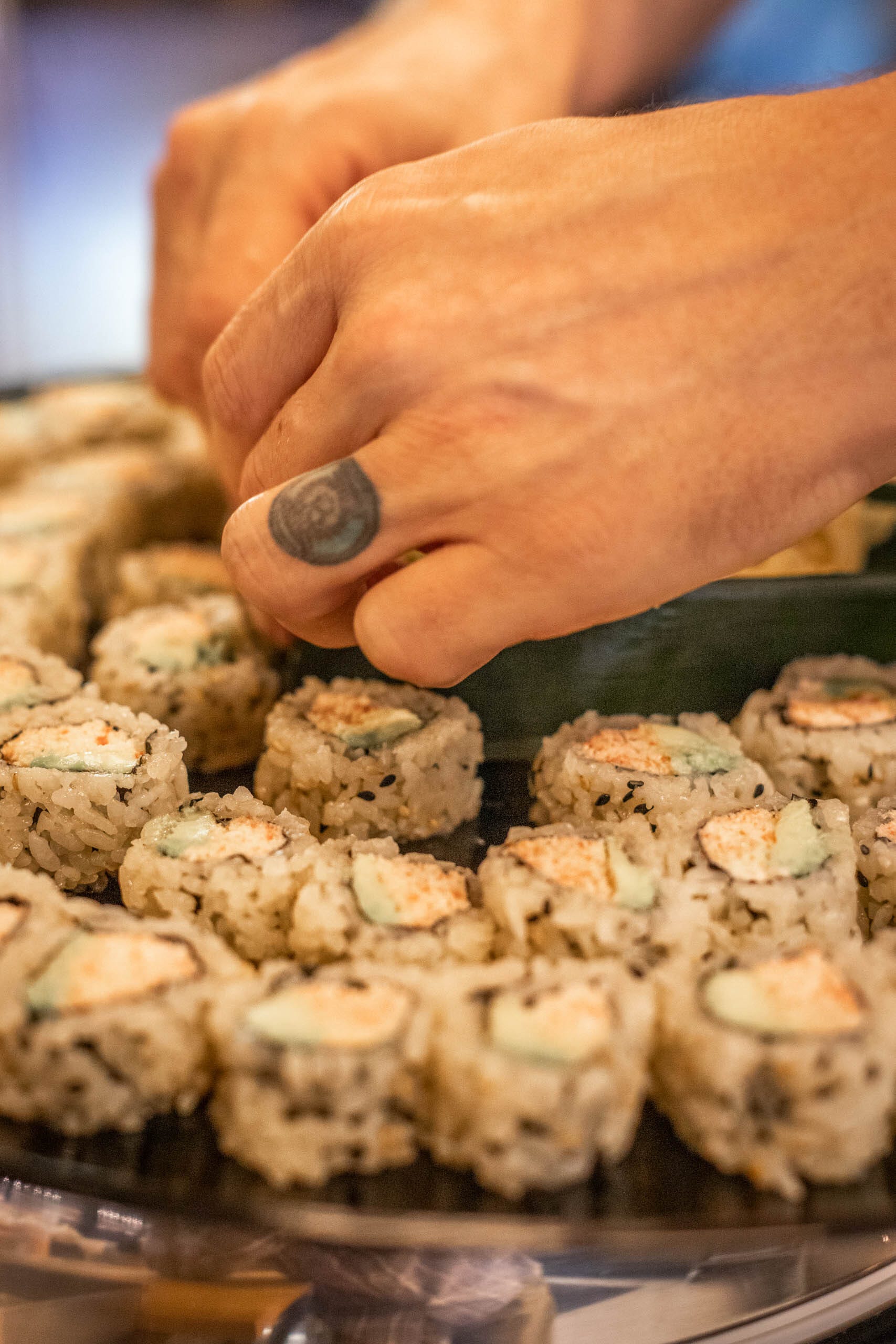
“I don’t know how Adam and I did it without Roman here,” Conaty said, referring to Adam Goolan, a sushi chef at Five Senses.
Roman said the hours are shorter than at The French Laundry and the pay is better. When the Five Senses crew heads home at 10 p.m., he has told them, his old kitchen would be starting its second seating.
“I love working with my brother, and I feel like I am not only learning a completely new skill, but also that I am bringing my learning to the table, too,” Roman said.
The rest of the core team is small. Ben Cereghini, executive chef and a co-owner with a small stake in the restaurant, has worked with Conaty for about six years and helped build Five Senses from the ground up; his own record runs through The French Laundry, Meadowood, Enigma in Barcelona and years as sous chef at Press in St. Helena. Goolan is a sushi chef. Candice Stermer runs the front of house. Conaty said the full-time staff have no human-resources, marketing or website experience among them and that everyone who works there lives in Calistoga.
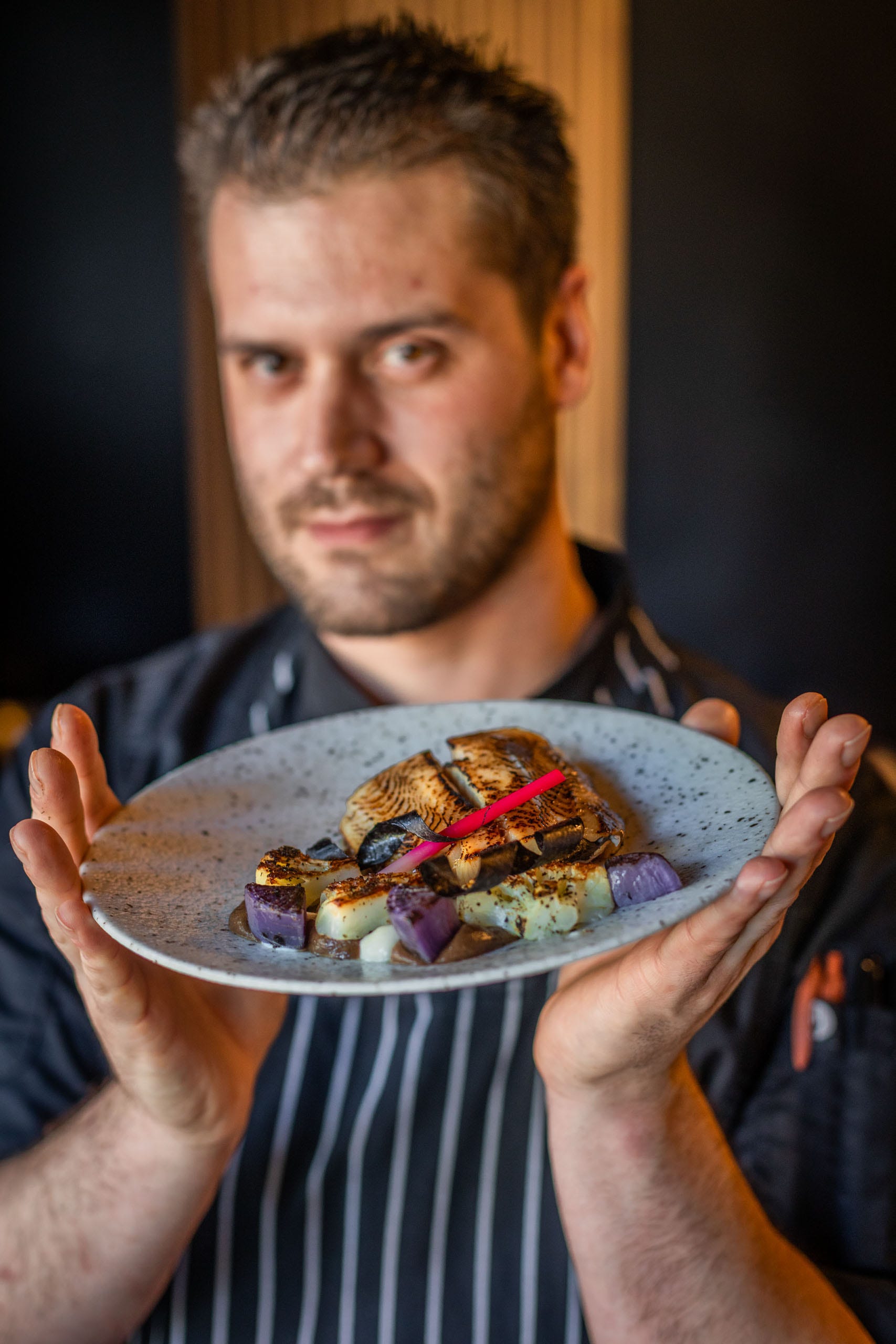
Fish Six Days a Week
What has people talking is the fish.
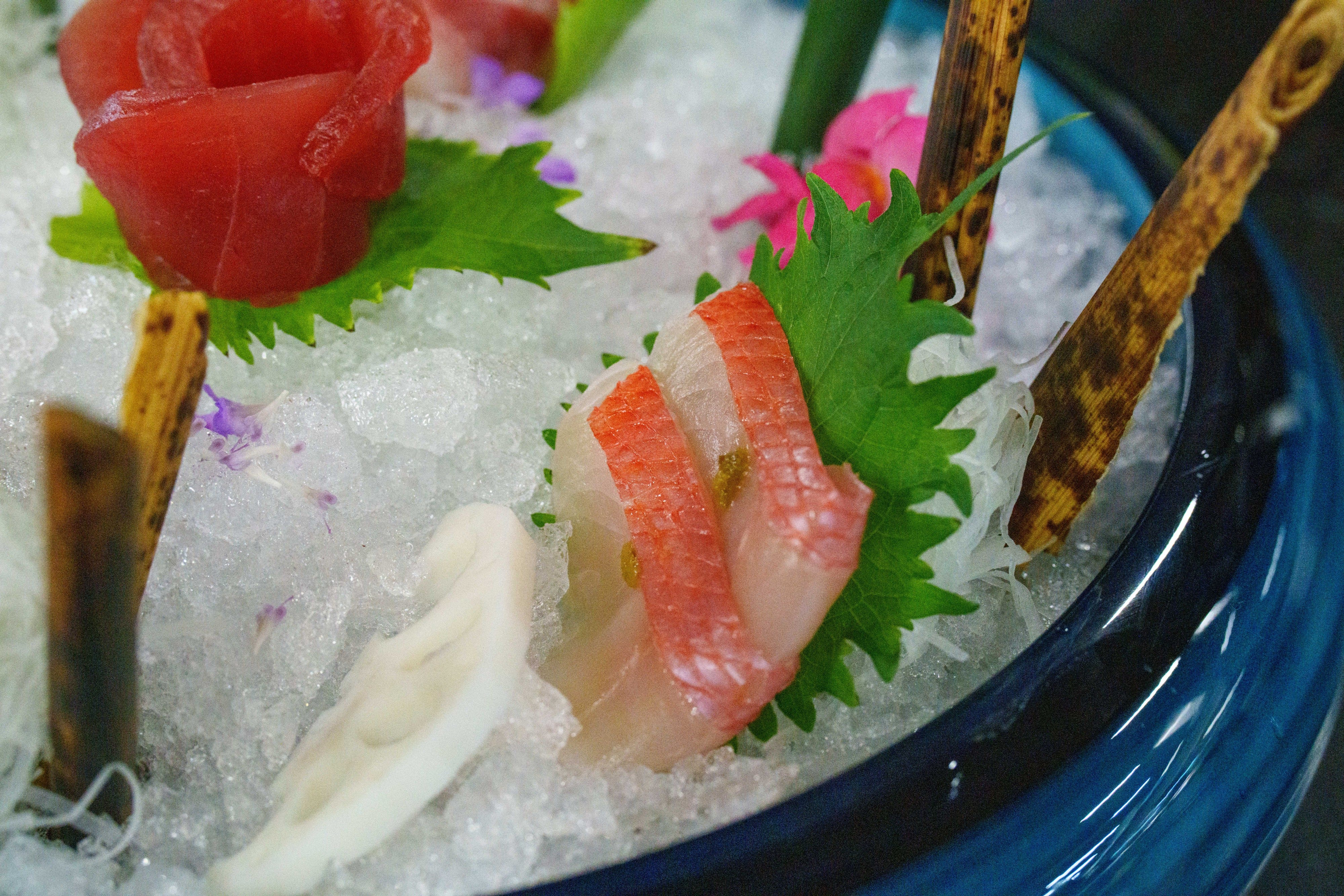
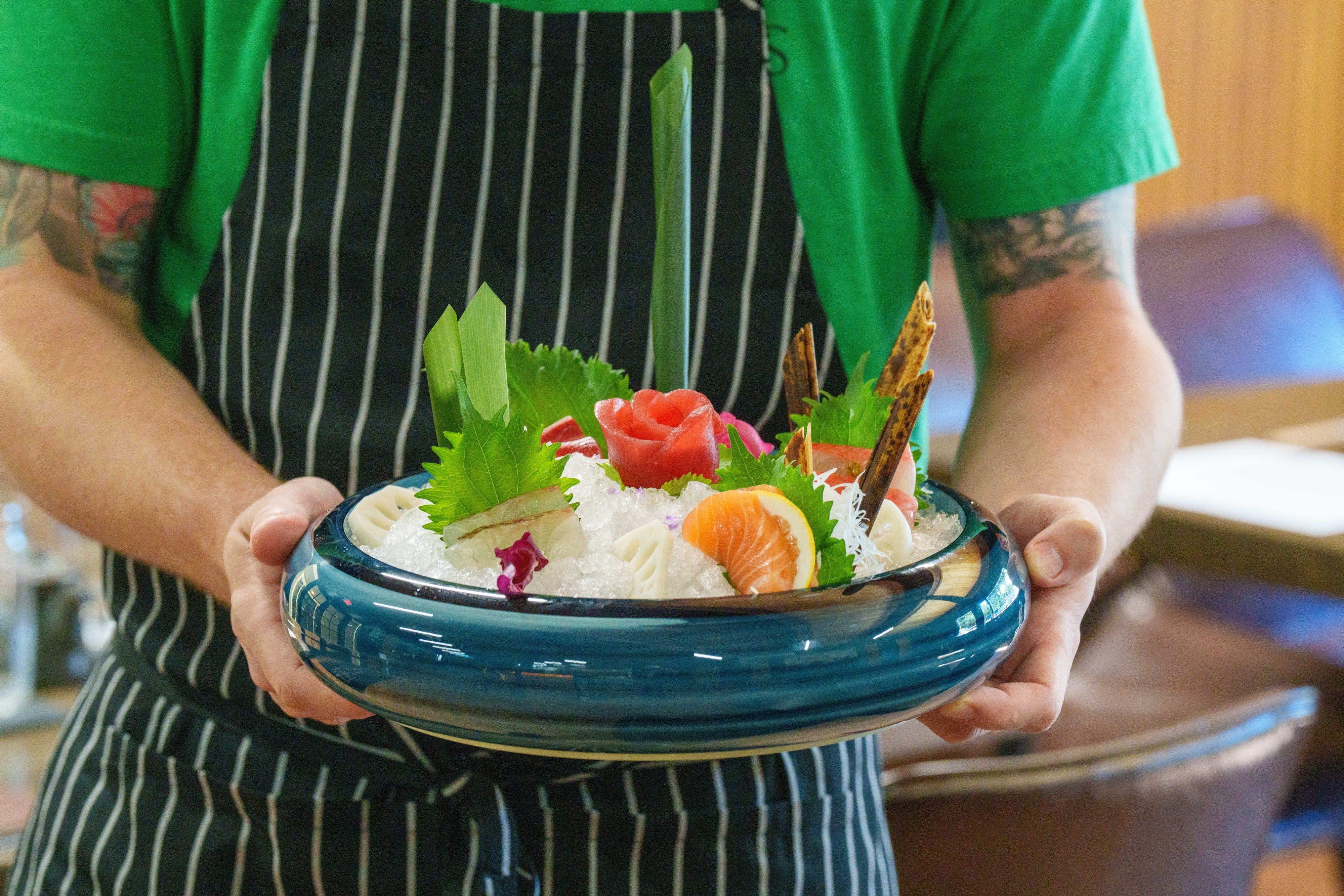
Conaty runs the sushi bar himself. The showpiece is the chef’s 10-piece sashimi selection, $50, arranged on an okie — a Japanese platter the kitchen fills with crushed ice and plates, in Conaty’s words, like a story. One version included a rose folded from big-eye tuna, Scottish salmon laid over local Meyer lemon, golden-eye snapper from Hokkaido finished with a yuzu-rind chili paste, Kagoshima yellowtail and Kyoto red snapper, set among shiso, shaved lotus root, bamboo and small flowers picked around Calistoga. The daikon threads that nest the fish are shaved by hand from a whole log on a Japanese rotary slicer.
Fish arrives every day but Sunday. About 80% of it is Japanese, overnighted, with the rest rotating among New Zealand, San Francisco, Korea and Hawaii, and twice a week a box arrives whose contents Conaty does not choose, which is why the selection changes weekly. He buys through True World, based in Hayward, and a sales representative, Akini O’Flaherty, who has sold him fish since he was 19 at Morimoto.
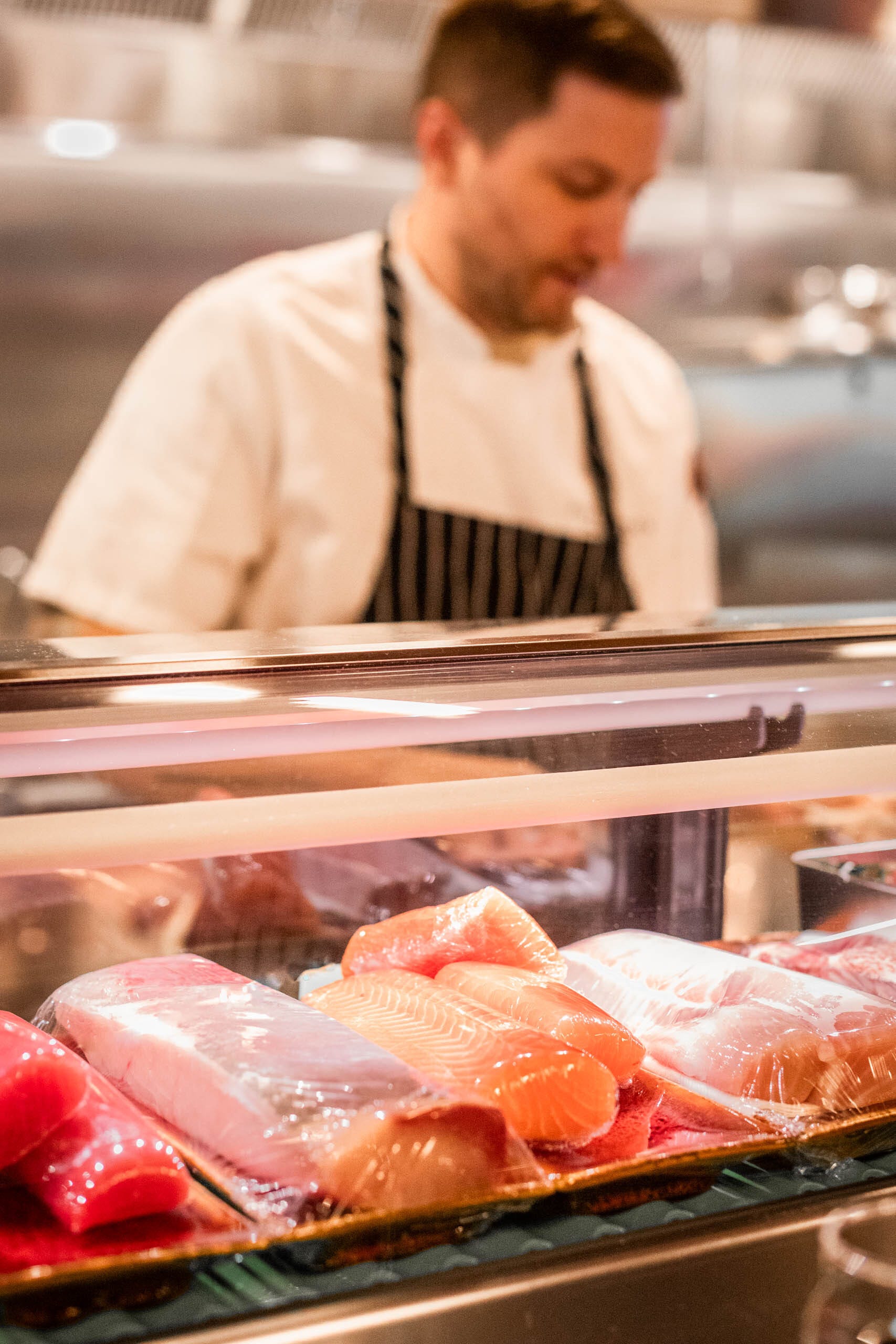
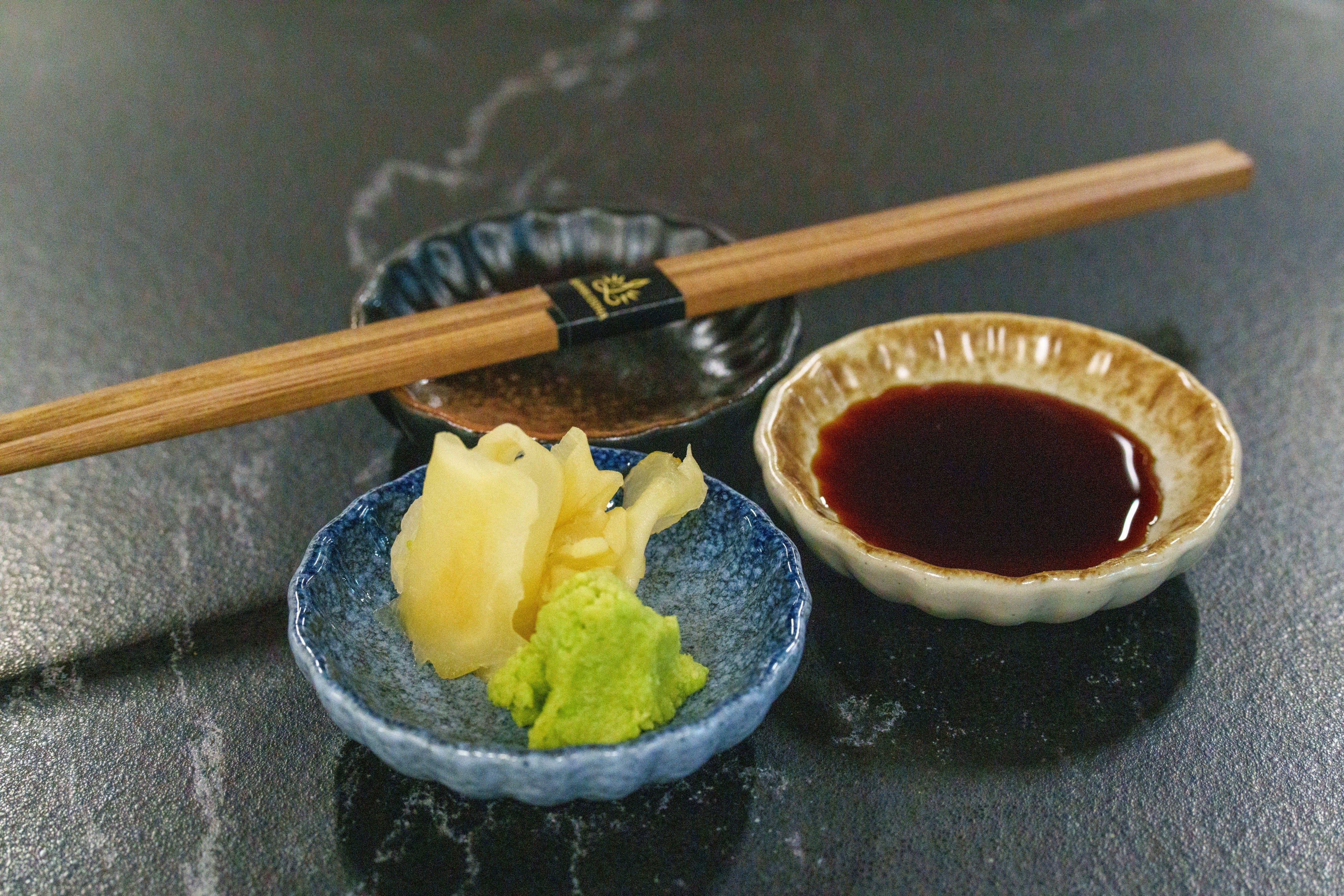
Saturday’s delivery is gutted, scaled and wrapped in fish paper for Sunday service, and several fish are held longer on purpose: Big-eye tuna is dry-aged three days in specialized paper to draw out blood and brighten the color, madai is aged two days, and another sea bream is cured two days in cherry blossom leaf. The kitchen grates its wasabi fresh, pickles its own ginger and makes its own soy sauce.
Three months in, Conaty said the fish nobody else in the area carries is what sells. The specialty Japanese fish typically sells out each week, and he now sells more of it than red tuna. Uni, which he was sure no one in Calistoga would order, goes through six to 10 trays a week at 10 orders a tray.
“We don’t have to drive to San Francisco to have all these different types of fish from Japan,” Conaty said diners tell him.
A couple visiting from out of town told Napa Valley Features one night that they had walked in without knowing the place and had not expected sushi of this quality — they compared it to Tokyo — in Calistoga.
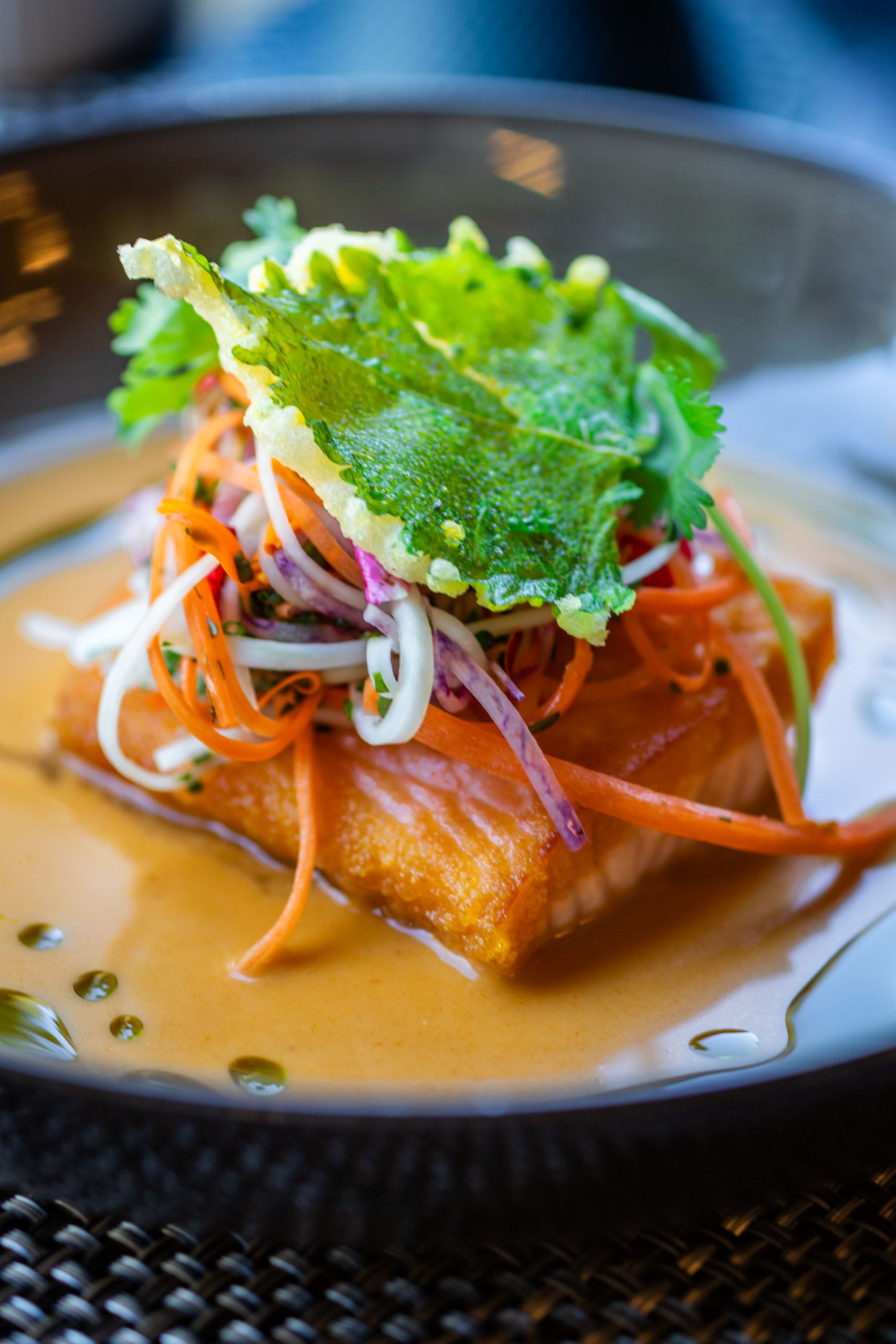
That 15-year supplier relationship is also the math behind the prices. Conaty said he buys Ora King salmon at about $13 a pound, against roughly $23 from other area distributors — the gap that let him plate a 5-ounce portion at $30 when he opened. That salmon, farmed in open ocean off New Zealand and fed crustaceans, came with a Greek-yogurt ponzu infused with shiso oil, braised smoked purple daikon and a tempura shiso leaf. The current menu lists a pan-seared wild salmon at $38 with pumpkin Thai red curry.
The opening menu ran from $10 small plates and sushi rolls mostly $12 to $25, through a $23 black garlic ramen, to a $35 Flannery Farms New York steak — a 6- to 8-ounce cut with wasabi pea puree, furikake carrots, a kalbi demi-glace and a chili crunch the kitchen takes four days to make. Prices have since moved up: Shared plates now run $8 to $30, rolls $12 to $28, the black garlic ramen $28 and the Flannery Farms steak $40, and the kitchen added a 4-ounce Japanese A5 wagyu at $100. Nearly everything is prepped fresh each day; the spicy mayo, made twice a week, is one of the few exceptions. Two rolls carry family names — “My Wife’s Roll” for Rita and “Junior’s Roll” for the couple’s son, Spencer Jr., 3.
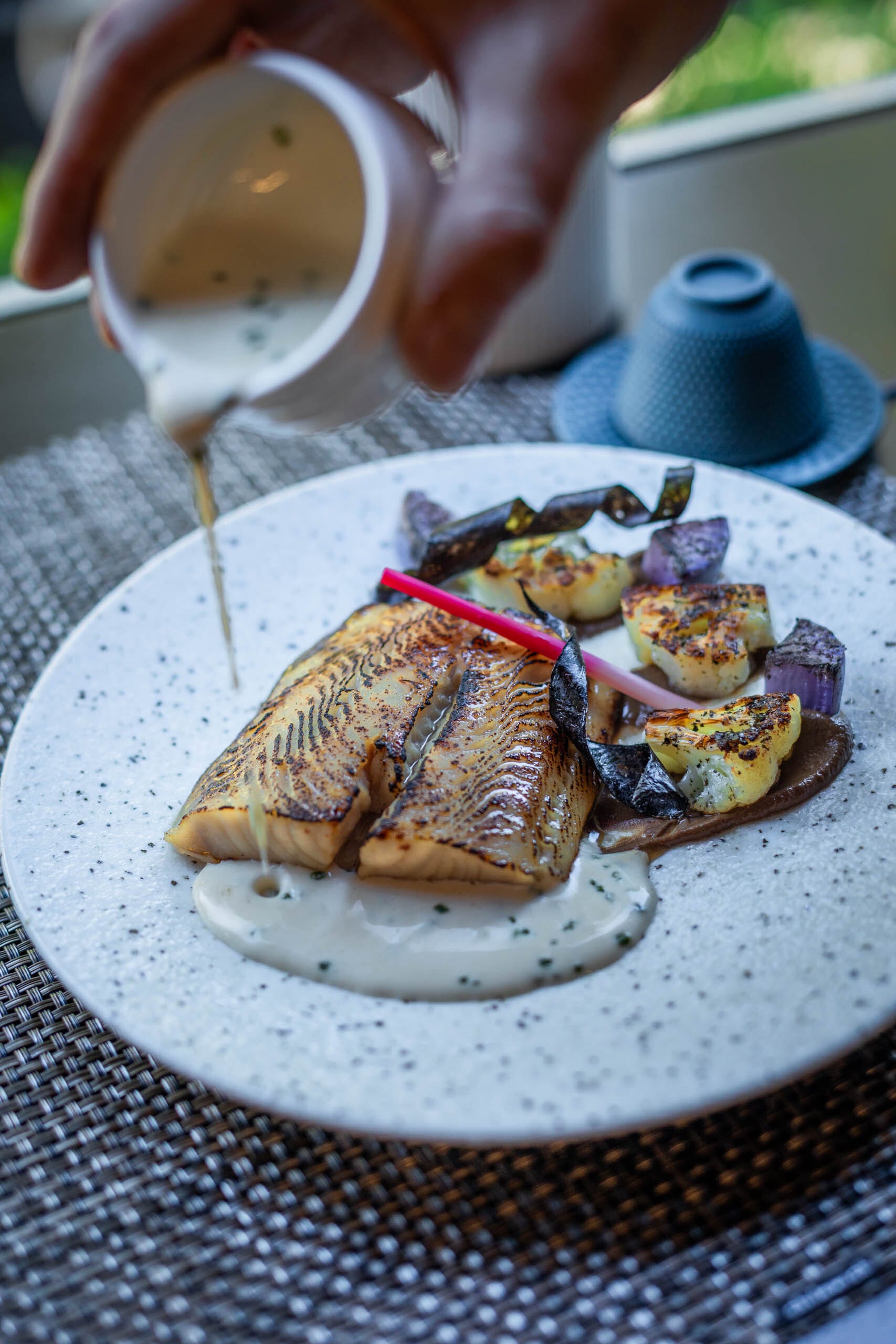
“These dishes are still going to look very refined and sexy,” Conaty said. “The food will be extremely beautiful and maybe feel fancy, but the atmosphere and everything is very casual.”
The ramen remains the signature, a dish he cooked at wineries for years. The noodles are made in-house and cut on a pasta machine — a technique he learned at Morimoto and once demonstrated on stage at the Pebble Beach Food & Wine festival. The broth starts with black garlic the kitchen ferments for two and a half to three months, pureed with dashi, simmered six hours and strained, then finished with smoked maitake mushrooms and a sous-vide jidori egg. Jidori chickens, a Japanese breed, lay eggs with deep orange fatty yolks, and Conaty tells diners to stir the egg into the broth so it thickens and coats the palate. It is vegetarian unless diners add a sous-vide chicken thigh, and it is the dish he pairs with cabernet.
Some reviews have said the room does not feel like Japan. Conaty said that was never the idea. The restaurant is a former antique store converted between January and June, the kitchen visible from both the dining room and the sushi bar, an ambient playlist inspired by the band Tycho that Conaty assembled with Cereghini, and, on the walls, paintings from his childhood home. He designed it in his father’s memory, with a touch of Art Deco modernism.
“I never once built this place to make you feel like you were stepping foot into Japan,” Conaty said. “I built this place to make you feel like you’re stepping into my home.”

Built by Calistoga, Now Feeding the Valley
Conaty has lived in Calistoga for 12 years, commuting from the town to every kitchen on his resume. He met Rita, a third-generation Calistogan, after a 15-year relationship ended and a friend talked him into a dating app. She was his first match and the only date he went on.
“We never looked back,” he said. They married and have a son and a daughter.
Rita’s family ran Carl’s Body Shop, a longtime fixture in the valley, and she grew up alongside the sons of Dan Ferris, the contractor who built Brian Arden, helped build Indian Springs and owned an antique store on Lincoln Avenue. The offer came at a pool party. Rita was swimming with the kids at the Ferris house when Dan’s wife, Kathy, asked why the couple didn’t take the antique store for their restaurant.
“That’s literally how this happened,” Conaty said.
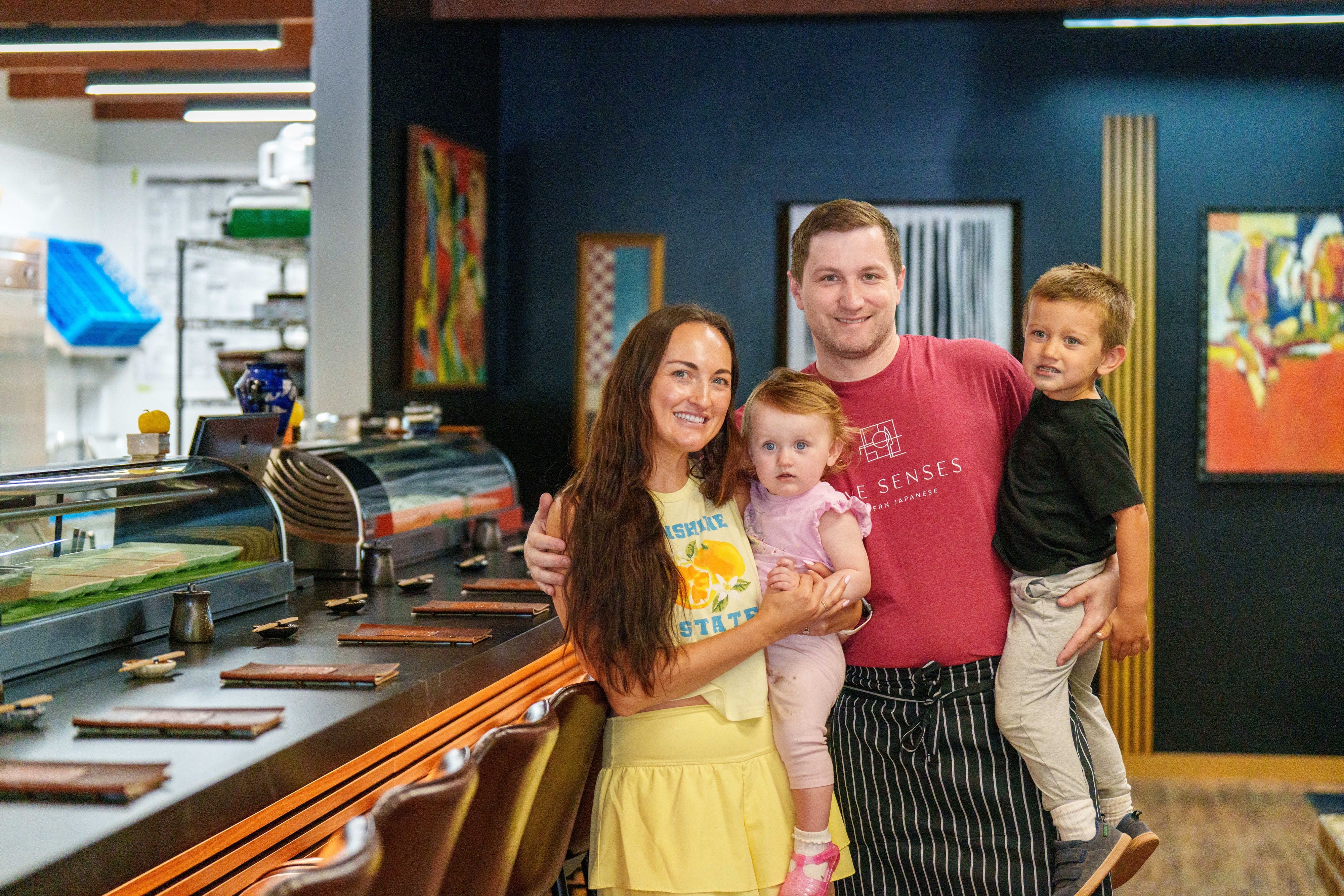
Ferris then built the restaurant as contractor, finishing in six months. Conaty said that with anyone else the job would have cost him millions and that Taylor Plumbing, Norris Electric and other local trades stepped up, knowing he did not have much money. He opened without investors, on savings and debt, after a year running Five Senses as a catering company — tasting menus in private homes and winemaker dinners at wineries — while the restaurant was built. Business owners in town, he said, told him he was insane to try it.
“The community came together to make this place happen for me and my wife,” Conaty said. “Absolutely, I would have run out of money in the first month.”
He said the support still catches him off guard.
“You feel blessed,” he said. “At the same time, you ask yourself, why me? Why are they doing this?”
The wine list started with a phone call from a chef friend whose restaurant in Elk, on the Mendocino coast, had closed after two years with about 1,400 bottles of wine and sake still in the cellar. Conaty said he could not afford it. His friend told him to make a lowball offer. He said $5,000, and the owners took it. He had earned the money back through catering before the restaurant opened.
The plan was to pour only local wine once that stock ran down. Locals changed his mind. About 80% of the list is Napa Valley now, with two Mendocino wines, but Conaty said at least 10 regulars have asked him not to drop the bottles from France, South Africa, Chile, Argentina and Washington that came with the Elk cellar. They live here, they told him, and can drink Napa wine any time they want. A Spanish albariño in a blue bottle painted with white waves has become a house favorite with sushi.
The dining room seats 40 to 50, patio included, depending on how the tables are turned. Dinner runs 4 to 8:30 p.m., with a 4 to 5 happy hour of hand rolls, gyoza, beer, hot sake and five wines. Conaty said the restaurant may shift to 5 to 9 for the winter, since the 4 o’clock hour has gone quiet as the season winds down and most Calistoga restaurants open at 5; he and Stermer had not decided as of this week. Rita serves on weekends.
Takeout, Noon to Close
From the start, Conaty said, the whole menu could be ordered to go, and the restaurant built a lidded sushi platter — all rolls, all nigiri or all sashimi, about 72 pieces, roughly $120 to $150, enough for six — with Concerts in the Park in mind. For the first month, reservations and to-go orders were by phone only, a choice he made so his staff would not be overrun by online bookings while the room found its footing.
The program launching today opens a midday window. Wednesday through Sunday, from noon until close, customers call the restaurant and ask for Stermer, who takes the order and sets a pickup time. Everything on the menu is available, ramen included. If the orders come, Conaty said, online ordering through Toast may follow in a week or two.
He said locals have been asking him to open for lunch since the summer. He wants to, but as a small restaurant with no investors, a lunch service would double his payroll for a crowd he cannot predict. He, Cereghini and Stermer are in the building all day anyway.
“Why not at least offer takeout for the town and see if that helps at all?” Conaty said.
He also has wineries in mind. Several have asked whether they could order lunch for their staff — 20 bento boxes, say — the way they rotate through other restaurants in town once a week.
Takeout, he admitted, is not something he likes. Once a bag leaves the building, a dropped order or a tipped roll becomes a bad review he cannot control.
“To go does actually really scare me in a sense as a business,” Conaty said. “But payroll also scares the hell out of me. So if this is my one leeway to make the town happy for lunchtime, I’m all for it.”
He said dinner alone is keeping the restaurant healthy and that he is doing this because people asked. He named getting through a Calistoga winter as his biggest worry when he opened, and the reason he keeps returning to the same goal. For a town that empties out after the last tasting room closes and a valley workforce that finishes its shifts late, a sushi bar that will hand over a full dinner at the door in the middle of the afternoon might be the most practical thing he has done yet. For everyone who cannot get a table, it may also be the only way in.
“I’m tired as hell, but I’ve never felt more blessed in my life,” Conaty said. “Even if we only sell one thing, we were here anyway.”
Five Senses, 1227 Lincoln Ave., Suite C, Calistoga. 707-947-9988. spencer@fivesensesnapa.com. Dining room open Wednesday through Sunday, 4 to 8:30 p.m. Takeout orders by phone, Wednesday through Sunday, noon to close.


—
Tim Carl is a Napa Valley-based photojournalist.
Clark James Mishler is a Calistoga-based photographer.
Today’s Polls:
Explore These Related Articles


Browse All Napa Valley Features Stories
Browse All Sonoma County Features Stories
Browse All Lake County Features Stories
Browse All Calistoga Currents Stories
—
The views, opinions and data presented in this article are those of the author and do not necessarily reflect the official policy, position or perspective of Napa Valley Features or its editorial team. Any content provided by our authors is their own and is not intended to malign any group, organization, company or individual.
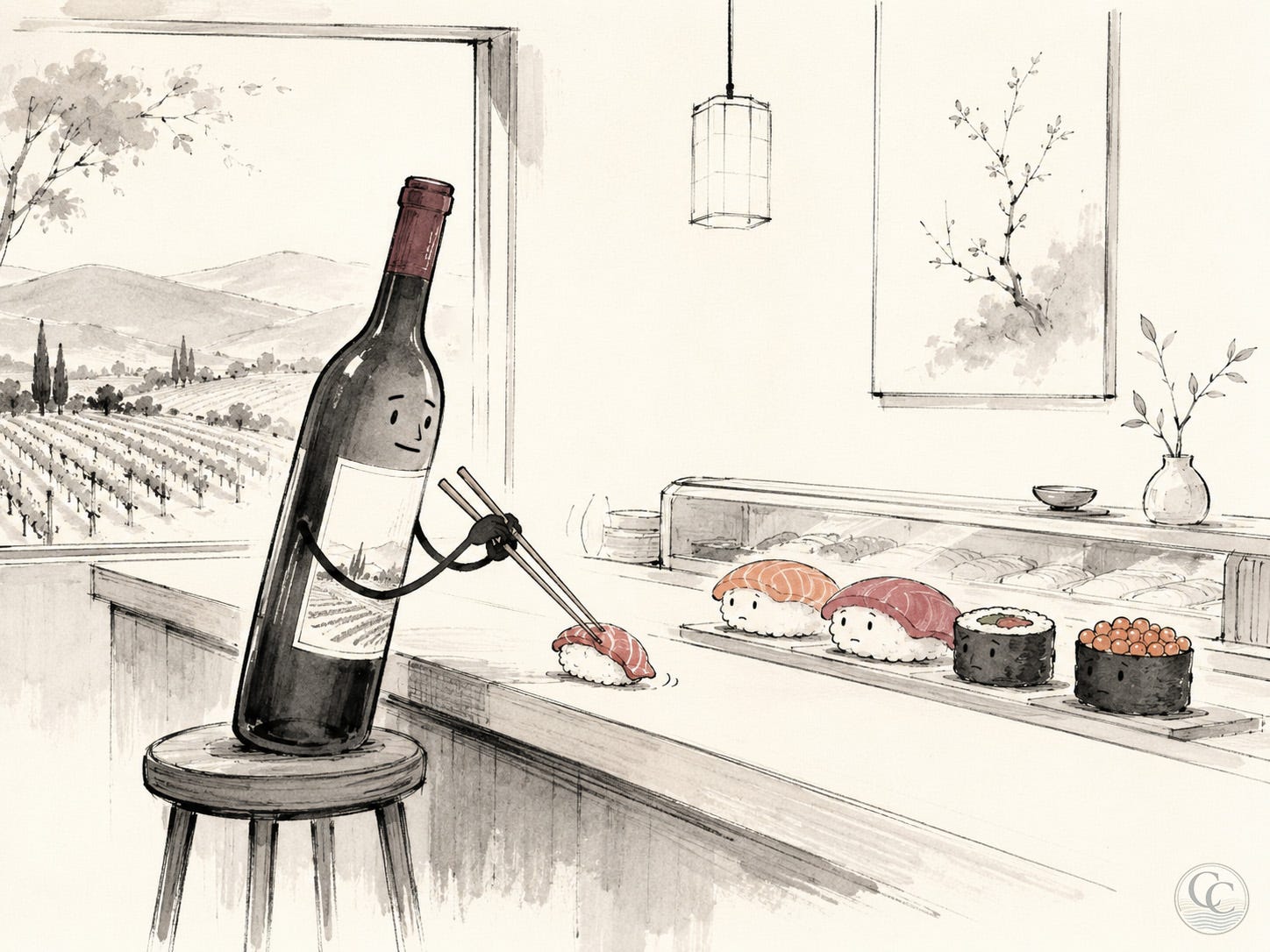
Our illustrations are produced through a multistep process of generative tools, digital sketching and photo editing, often starting from our own images or sketches.
Great story and photos ! Can’t wait to visit.